Key Takeaways
✓ Magnesium glycinate and magnesium bisglycinate are two names for the same compound: one magnesium bound to two molecules of the amino acid glycine.
✓ What differs between products is not the name. It is the elemental magnesium per serving, whether the chelate is "buffered" with magnesium oxide, and how the product is tested.
✓ The number to compare is elemental magnesium, not the weight of the whole compound.
The short answer
They are the same thing. "Bis" is a chemistry prefix that means two. In this compound, each magnesium is held by two glycine molecules, so the full name is magnesium bisglycinate. "Magnesium glycinate" is the shorter name most labels use. Older papers call it magnesium diglycinate. You may also see "magnesium glycinate chelate" or simply "chelated magnesium". All of these point to the same ingredient.
If you are comparing two bottles and one says glycinate while the other says bisglycinate, the name alone tells you nothing about which is better. The Supplement Facts panel does.
Why there are two names
Glycine is the smallest amino acid. When two glycine molecules grip one magnesium, the result is a ring-shaped structure called a chelate, from the Greek word for claw. Chemists name it by counting the glycines: bisglycinate. Marketers shortened it. Neither name is wrong, and neither is a different or stronger form.
What actually differs between products
1. Elemental magnesium per serving
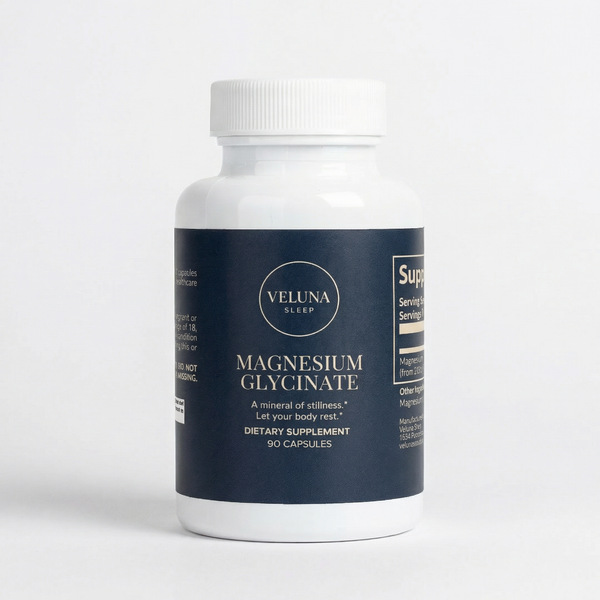
Most of the weight of this compound is glycine, not magnesium. A capsule that weighs 800 mg delivers far less than 800 mg of magnesium. The figure that matters is elemental magnesium, and a clear label states it. Veluna Magnesium Glycinate, for example, lists 275 mg of elemental magnesium from 2,500 mg of magnesium glycinate, per three capsules.
2. Buffered or not
Some products mix the chelate with magnesium oxide to raise the magnesium number on the label. This is usually called "buffered". It is not hidden, but you have to look: if magnesium oxide appears in the ingredients, the product is a blend rather than a pure chelate.
3. Serving size and testing
Because the compound is bulky, a full serving is often two to four capsules. Check how many capsules the stated amount refers to, and whether the product is third-party tested.
What the research says about this form
A systematic review of 14 studies comparing magnesium supplements found that organic forms appear to be more bioavailable than inorganic ones such as oxide, and that the percentage absorbed falls as the dose rises. It also concluded that all forms can maintain normal levels in healthy people (PMID: 34111673).
An early controlled trial compared magnesium diglycinate with magnesium oxide in 12 patients who had part of their small intestine removed. Absorption was similar overall, was substantially greater from the chelate in the four patients who absorbed oxide worst, and the chelate was better tolerated (PMID: 7815675).
In a 2025 placebo-controlled trial, 155 adults who reported poor sleep took 250 mg of elemental magnesium as bisglycinate, or placebo, for four weeks. Scores on a standard sleep questionnaire improved modestly more with magnesium. The authors describe the effect as small and call for longer studies with objective sleep measures (PMID: 40918053).
Research discussed here relates to individual ingredients and does not establish that the finished Veluna product has been clinically studied or will produce the same results.
How much is sensible
The NIH sets the upper limit for magnesium from supplements at 350 mg a day for adults; magnesium from food does not count toward it. Too much supplemental magnesium can cause loose stools. If you are pregnant, nursing, have kidney disease or take prescription medication, talk to a healthcare professional first (NIH Office of Dietary Supplements).
Where Veluna fits
Veluna Magnesium Glycinate is a chelated magnesium glycinate, which is to say bisglycinate: 275 mg of elemental magnesium per three-capsule serving, 30 servings per bottle, third-party tested. Magnesium supports normal muscle and nervous-system function. You can also see it alongside our bundles on the magnesium for sleep page.
Common questions
Is magnesium bisglycinate better than magnesium glycinate?
No. They are the same compound, so neither can be better. Compare elemental magnesium per serving, whether the product is buffered with oxide, and how it is tested.
What does "chelated" mean on a magnesium label?
It means the magnesium is bound to an organic molecule, here the amino acid glycine. Our guide to chelated magnesium covers the other types.
Why does my bottle say 2,500 mg but only 275 mg of magnesium?
The larger number is the weight of the whole compound, glycine included. The smaller number is the magnesium itself, and it is the one to compare.
How does it compare with magnesium citrate?
Both are organic forms. See magnesium glycinate vs. magnesium citrate.
References
- Pardo MR, Garicano Vilar E, San Mauro Martín I, Camina Martín MA. Bioavailability of magnesium food supplements: a systematic review. Nutrition. 2021;89:111294. PMID: 34111673
- Schuette SA, Lashner BA, Janghorbani M. Bioavailability of magnesium diglycinate vs magnesium oxide in patients with ileal resection. JPEN J Parenter Enteral Nutr. 1994;18(5):430-435. PMID: 7815675
- Schuster J, Cycelskij I, Lopresti A, Hahn A. Magnesium bisglycinate supplementation in healthy adults reporting poor sleep: a randomized, placebo-controlled trial. Nat Sci Sleep. 2025;17:2027-2040. PMID: 40918053
- National Institutes of Health, Office of Dietary Supplements. Magnesium: Fact Sheet for Health Professionals. ods.od.nih.gov
*These statements have not been evaluated by the Food and Drug Administration. This product is not intended to diagnose, treat, cure, or prevent any disease. This article is for informational purposes only and does not constitute medical advice. Talk to a healthcare professional before starting any supplement, especially if you are pregnant, nursing, taking medication, or have a medical condition.