Key Takeaways
✓ Chronic stress can lead to hyperarousal, making it difficult to fall and stay asleep (Riemann, 2010).
✓ Natural remedies like ashwagandha and valerian root may help reduce anxiety and improve sleep quality (Fatima, 2024; Chandra Shekhar, 2024).
✓ Establishing a consistent bedtime routine and practicing mindfulness can promote relaxation and improve sleep (Blake, 2018).
The Link Between Work Stress and Sleepless Nights
Do you find yourself staring at the ceiling at night, replaying stressful work events in your mind? You're not alone. Work stress is a common culprit behind sleep disturbances, creating a vicious cycle where lack of sleep exacerbates stress and vice versa. Understanding this connection is the first step toward finding effective, natural relief.
When you're under stress, your body activates the hypothalamic-pituitary-adrenal (HPA) axis, releasing cortisol and other stress hormones. While this response is helpful in acute situations, chronic stress can lead to HPA axis dysregulation and a state of hyperarousal, making it difficult to fall asleep and stay asleep (Riemann, 2010). This hyperarousal isn't just mental; it involves physiological changes like increased heart rate and muscle tension, further disrupting your sleep.
The good news is that there are proven strategies to mitigate the impact of work stress on your sleep. By understanding the science behind this connection and implementing natural solutions, you can reclaim your nights and wake up feeling refreshed and ready to tackle the day. If you are looking to calm your mind, consider reading Achieve Mind Calm: Proven Techniques for a Peaceful Night.
Understanding the Science: Stress, Hyperarousal, and Sleep
The relationship between stress and sleep is complex and bidirectional. Stress can trigger insomnia, and insomnia can amplify feelings of stress, anxiety, and even depression (Blake, 2018; Riemann, 2025). To break this cycle, it's essential to understand the underlying mechanisms.
Hyperarousal plays a central role in insomnia, characterized by increased cognitive, emotional, and physiological activity (Riemann, 2023). This heightened state can manifest as racing thoughts, difficulty relaxing, and an inability to quiet your mind before bed. Research shows that individuals with insomnia often exhibit hyperarousal features in their sleep architecture, including increased sleep fragmentation and reduced slow-wave sleep (Di Marco, 2025).
Stressful life events, particularly work-related stressors, can significantly impact sleep quality. A study in the Journal of Sleep Research found that stress reactivity—the degree to which your sleep is disrupted by stress—is a key vulnerability factor for developing insomnia and circadian rhythm disorders (Kalmbach, 2018). Managing stress and reducing hyperarousal are therefore crucial for improving sleep.
Research discussed here relates to individual ingredients and does not establish that the finished Veluna product has been clinically studied or will produce the same results.
Natural Remedies for Stress-Related Sleep Problems
When work stress keeps you up at night, natural remedies can offer a gentle yet effective way to promote relaxation and improve sleep quality. Several herbs and supplements have been studied for their ability to reduce anxiety and promote restful sleep.
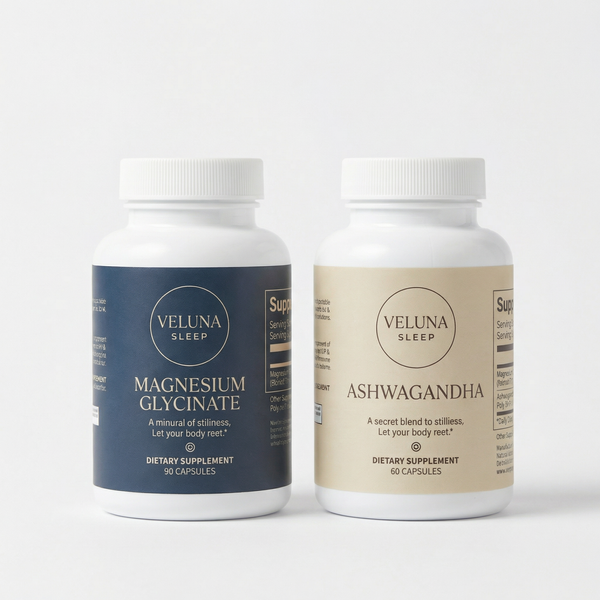
Ashwagandha, an adaptogenic herb, has gained popularity for its stress-reducing and sleep-enhancing properties. A systematic review and meta-analysis published in Human Psychopharmacology found that Withania somnifera (ashwagandha) is safe and effective for reducing anxiety and improving sleep in individuals with anxiety and insomnia (Fatima, 2024). It may help regulate cortisol levels and promote a sense of calm. You can explore the benefits of Veluna Ashwagandha to support your sleep routine.
Valerian root is another well-known natural remedy for sleep problems. A randomized, double-blind, placebo-controlled clinical study in Advances in Therapy demonstrated that a standardized extract of Valeriana officinalis improved overall sleep quality in human subjects with sleep complaints (Chandra Shekhar, 2024). Valerian root may help increase levels of gamma-aminobutyric acid (GABA), a neurotransmitter that promotes relaxation and sleep. If you are interested in supplements, you can also check out Best Sleep Supplements for Anxiety and Stress Relief.
Creating a Relaxing Bedtime Routine
Establishing a consistent and relaxing bedtime routine is essential for signaling to your body that it's time to sleep. This routine should be tailored to your individual needs and preferences, but here are some general guidelines:
- Set a consistent sleep schedule: Go to bed and wake up around the same time every day, even on weekends, to regulate your body's natural sleep-wake cycle.
- Create a relaxing environment: Make sure your bedroom is dark, quiet, and cool. Use blackout curtains, earplugs, or a white noise machine to minimize distractions.
- Limit screen time before bed: The blue light emitted from electronic devices can interfere with melatonin production and disrupt sleep. Avoid using phones, tablets, and computers for at least one hour before bed.
- Practice relaxation techniques: Engage in activities that promote relaxation, such as deep breathing exercises, meditation, or gentle stretching.
- Consider a warm bath or shower: The drop in body temperature after a warm bath or shower can help you feel sleepy.
Mindfulness practices can be particularly helpful in calming the mind and reducing anxiety before bed. Studies have shown that mindfulness-based interventions can improve sleep quality and reduce insomnia symptoms (Blake, 2018). Even a few minutes of daily mindfulness practice can make a significant difference. You can learn more about calming your mind in The Complete Guide to Mind Calm: How to Quiet Your Mind for Deeper Sleep.
Take our 60-second quiz to discover the science-backed sleep solution matched to your unique needs.
Take the QuizOptimizing Your Sleep Environment
Your sleep environment plays a crucial role in determining the quality of your sleep. Creating a sleep-conducive environment can significantly improve your ability to fall asleep and stay asleep. Here are some key factors to consider:
- Temperature: The ideal sleep temperature is around 65 degrees Fahrenheit (18 degrees Celsius). A cool room helps lower your body temperature, signaling to your brain that it's time to sleep.
- Darkness: Darkness is essential for melatonin production. Use blackout curtains or an eye mask to block out any light.
- Quiet: Minimize noise distractions by using earplugs, a white noise machine, or a fan.
- Comfortable bedding: Invest in a comfortable mattress, pillows, and bedding that suit your preferences.
- Cleanliness: Keep your bedroom clean and free of clutter to create a relaxing and inviting space.
Additionally, consider the impact of your bedroom's aesthetics on your sleep. Calming colors, such as blues and greens, can promote relaxation, while stimulating colors, such as reds and oranges, may have the opposite effect. Personalize your space to make it a haven for rest and rejuvenation.
When to Seek Professional Help
While natural remedies and lifestyle changes can be effective for managing stress-related sleep problems, it's essential to recognize when professional help is needed. If you experience any of the following, consider consulting a healthcare professional or sleep specialist:
- Chronic insomnia that persists for more than three months
- Daytime fatigue that interferes with your daily activities
- Difficulty concentrating or remembering things
- Mood changes, such as anxiety or depression
- Suspected sleep disorder, such as sleep apnea or restless legs syndrome
A healthcare professional can help identify any underlying medical conditions contributing to your sleep problems and recommend appropriate treatment options. These may include cognitive behavioral therapy for insomnia (CBT-I), medication, or other therapies tailored to your specific needs. Remember, seeking professional help is a sign of strength, not weakness, and can significantly improve your quality of life.
The Bottom Line
Work stress can significantly impact your sleep, leading to hyperarousal and chronic insomnia. By understanding the science behind this connection and implementing natural strategies, you can break the cycle and reclaim your nights. Natural remedies like ashwagandha and valerian root, combined with a relaxing bedtime routine and an optimized sleep environment, can promote relaxation and improve sleep quality.
Remember to prioritize self-care and seek professional help if your sleep problems persist. Taking proactive steps to manage stress and improve your sleep can have a profound impact on your overall health and well-being.
Ready to find the right sleep ritual for your needs? Take Veluna's free 60-second quiz to get a personalized recommendation.
References
- Fatima K, Malik J, Muskan F et al.. Safety and efficacy of Withania somnifera for anxiety and insomnia: Systematic review and meta-analysis. Human psychopharmacology. 2024. PubMed
- Pfaff A, Jud A, Schlarb A. Systematic review on the association between sleep-related hyperarousal and child maltreatment. Sleep medicine. 2021. PubMed
- Di Marco T, Djonlagic I, Dauvilliers Y et al.. Effect of daridorexant on sleep architecture in patients with chronic insomnia disorder: a pooled post hoc analysis of two randomized phase 3 clinical studies. Sleep. 2024. PubMed
- Riemann D, Dressle RJ, Benz F et al.. Chronic insomnia, REM sleep instability and emotional dysregulation: A pathway to anxiety and depression?. Journal of sleep research. 2025. PubMed
- Dressle RJ, Riemann D. Hyperarousal in insomnia disorder: Current evidence and potential mechanisms. Journal of sleep research. 2023. PubMed
- Kalmbach DA, Anderson JR, Drake CL. The impact of stress on sleep: Pathogenic sleep reactivity as a vulnerability to insomnia and circadian disorders. Journal of sleep research. 2018. PubMed
- Blake MJ, Trinder JA, Allen NB. Mechanisms underlying the association between insomnia, anxiety, and depression in adolescence: Implications for behavioral sleep interventions. Clinical psychology review. 2018. PubMed
- Di Marco T, Scammell TE, Sadeghi K et al.. Hyperarousal features in the sleep architecture of individuals with and without insomnia. Journal of sleep research. 2025. PubMed
- Chandra Shekhar H, Joshua L, Thomas JV. Standardized Extract of Valeriana officinalis Improves Overall Sleep Quality in Human Subjects with Sleep Complaints: A Randomized, Double-Blind, Placebo-Controlled, Clinical Study. Advances in therapy. 2024. PubMed
- Riemann D, Spiegelhalder K, Feige B et al.. The hyperarousal model of insomnia: a review of the concept and its evidence. Sleep medicine reviews. 2010. PubMed
Frequently Asked Questions
Stress activates the body's stress response, leading to the release of cortisol and other hormones. This can result in hyperarousal, making it difficult to fall asleep and stay asleep. Chronic stress can disrupt the sleep-wake cycle and contribute to insomnia.
Several natural remedies may help, including ashwagandha, valerian root, and chamomile tea. Ashwagandha can help regulate cortisol levels, while valerian root may increase GABA levels, promoting relaxation and sleep. Chamomile tea has calming properties that can help reduce anxiety before bed.
A relaxing bedtime routine might include setting a consistent sleep schedule, creating a dark, quiet, and cool sleep environment, limiting screen time before bed, practicing relaxation techniques like deep breathing or meditation, and taking a warm bath or shower.
You should seek professional help if you experience chronic insomnia that persists for more than three months, daytime fatigue that interferes with daily activities, difficulty concentrating, mood changes, or suspect you have a sleep disorder like sleep apnea or restless legs syndrome.
Yes, mindfulness practices can be helpful in calming the mind and reducing anxiety before bed. Mindfulness-based interventions have been shown to improve sleep quality and reduce insomnia symptoms. Even a few minutes of daily mindfulness practice can make a significant difference.