Editorial Note: This article is reviewed by the Veluna Sleep Editorial Team and references peer-reviewed research.
Key Takeaways
- Magnesium glycinate and collagen are both popular supplements, but they address different aspects of health.
- Magnesium glycinate primarily supports relaxation, sleep quality, and muscle function through its role in various enzymatic processes.
- Collagen is a structural protein vital for skin, joint, and bone health, but its direct impact on sleep is less established.
- While generally safe, potential side effects and interactions should be considered before combining these supplements.
Table of Contents
- Introduction: Magnesium Glycinate vs. Collagen
- Magnesium Glycinate: Mechanism of Action
- Collagen: Mechanism of Action
- Clinical Evidence: Magnesium Glycinate for Sleep
- Clinical Evidence: Collagen for Sleep and Related Benefits
- Dosage: Comparing Recommended Intakes
- Side Effects and Safety Considerations
- Timing: When to Take Each Supplement
- Stacking Magnesium Glycinate and Collagen: Synergy or Redundancy?
- Verdict: Should You Take Them Together?
The Veluna match for Magnesium Glycinate and Collagen: A Head-to-Head Comparison for Sleep and More
If this topic maps to your sleep pattern, the Deep Restore Full Set is the fastest next step for physical tension, recovery, soreness, and overnight restoration.
- Magnesium Glycinate
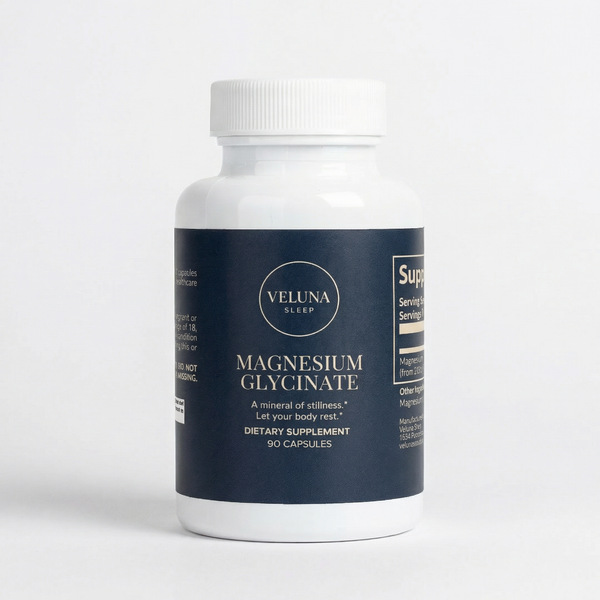
- Veluna Sleep Formula
- Grass-Fed Collagen Peptides
- Recovery Cream
$129 now, down from $179. That saves $82 versus the regular set price.
Introduction: Magnesium Glycinate vs. Collagen
Magnesium glycinate and collagen are two supplements that have gained significant traction in the wellness world. Magnesium glycinate is often touted for its potential to support relaxation and sleep quality, while collagen is primarily known for its role in promoting healthy skin, hair, nails, and joints. But can you take magnesium glycinate and collagen together for sleep? This article offers a comprehensive comparison of these two supplements, exploring their mechanisms of action, clinical evidence, dosage considerations, potential side effects, and whether combining them offers synergistic benefits or poses any risks. Are you struggling to find the perfect sleep solution? Take our sleep quiz to discover a personalized ritual tailored to your needs.Magnesium Glycinate: Mechanism of Action
Shop the products most relevant to this guide
For readers who want to test one lever first, these are the most relevant Veluna products from this article.
Collagen: Mechanism of Action
Collagen is the most abundant protein in the human body, providing structural support to skin, bones, tendons, ligaments, and other connective tissues. It is composed of amino acids, including glycine, proline, and hydroxyproline. As we age, our bodies naturally produce less collagen, which can lead to wrinkles, joint pain, and decreased bone density. Collagen supplements are typically derived from animal sources, such as bovine, porcine, or marine collagen. These supplements are broken down into smaller peptides that can be absorbed into the bloodstream and used to rebuild collagen in the body. While collagen is primarily known for its structural benefits, some studies suggest it may also have other health effects.Clinical Evidence: Magnesium Glycinate for Sleep
Several studies have explored the effects of magnesium supplementation on sleep quality. Preliminary evidence indicates that magnesium may improve sleep duration, sleep efficiency, and sleep onset latency (the time it takes to fall asleep). * A randomized controlled trial published in the *Journal of Research in Medical Sciences* found that magnesium supplementation significantly improved insomnia scores, sleep time, and sleep efficiency in elderly participants with insomnia (PMID: 23853635). * Another study in the *Journal of the American College of Nutrition* showed that magnesium supplementation improved subjective measures of insomnia in older adults (PMID: 12163983). * Research suggests that magnesium may also help with restless legs syndrome, which can disrupt sleep (PMID: 9863648). It's important to note that more research is needed to fully understand the effects of magnesium on sleep, particularly in different populations and with different forms of magnesium.Clinical Evidence: Collagen for Sleep and Related Benefits
While collagen is not primarily known as a sleep aid, it contains glycine, an amino acid that has been shown to promote relaxation and improve sleep quality. However, the amount of glycine in a typical dose of collagen may not be high enough to have a significant effect on sleep for everyone. * One study in the *Journal of Psychiatric Research* found that glycine supplementation improved sleep quality and reduced daytime sleepiness in individuals with poor sleep (PMID: 17168928). The amount of glycine used in this study was significantly higher than what you'd typically find in a collagen supplement. * Research suggests that collagen may also have other benefits that indirectly support better sleep, such as reducing joint pain and improving skin health. Chronic pain can often interfere with sleep, so reducing pain may lead to improved sleep quality. * A study published in *Skin Pharmacology and Physiology* showed that collagen supplementation improved skin elasticity, hydration, and wrinkle depth (PMID: 26362110).Dosage: Comparing Recommended Intakes
The optimal dosage of magnesium glycinate and collagen can vary depending on individual needs and health conditions. It's always best to consult with a healthcare professional to determine the right dosage for you. Typical supplement labels suggest the following: * **Magnesium Glycinate:** Commonly used amounts in studies include 200-400 mg of elemental magnesium per day. It's best to start with a lower dose and gradually increase it to avoid digestive upset. * **Collagen:** Typical supplement labels suggest 10-20 grams of collagen peptides per day. This can be taken in a single dose or divided throughout the day.Side Effects and Safety Considerations
Both magnesium glycinate and collagen are generally considered safe for most people when taken at recommended dosages. However, potential side effects and interactions should be considered. * **Magnesium Glycinate:** Common side effects of magnesium supplementation include diarrhea, nausea, and abdominal cramping, especially at higher doses. Magnesium may also interact with certain medications, such as antibiotics and diuretics. * **Collagen:** Collagen supplements are generally well-tolerated, but some people may experience mild digestive symptoms, such as bloating or heartburn. It's important to choose a high-quality collagen supplement from a reputable source to minimize the risk of contamination. Individuals with allergies to fish or shellfish should be cautious when using marine collagen.Timing: When to Take Each Supplement
The timing of when you take magnesium glycinate and collagen can influence their effectiveness. * **Magnesium Glycinate:** It's generally recommended to take magnesium glycinate in the evening, about 30-60 minutes before bedtime. This allows the magnesium to promote relaxation and prepare your body for sleep. * **Collagen:** Collagen can be taken at any time of day, but some people prefer to take it in the morning or after a workout to support muscle recovery. Since it doesn’t usually have immediate sedative effects, timing is less critical than with magnesium.Stacking Magnesium Glycinate and Collagen: Synergy or Redundancy?
Combining magnesium glycinate and collagen may offer synergistic benefits for some individuals. The magnesium glycinate can support relaxation and sleep quality, while the collagen can provide structural support for skin, joints, and bones. However, it's important to consider whether you truly need both supplements and whether the potential benefits outweigh the risks. If you already have adequate magnesium levels and are primarily interested in improving sleep, magnesium glycinate alone may be sufficient. Similarly, if you are primarily concerned with skin and joint health, collagen alone may be the better choice. Check out this article for other natural alternatives: Natural Alternatives To Prescription Sleep Medication.Verdict: Should You Take Them Together?
Whether you should take magnesium glycinate and collagen together depends on your individual needs and health goals. If you are looking to support both sleep quality and overall structural health (skin, joints, bones), combining these supplements *may* be beneficial. However, if you are primarily focused on one area, taking just one supplement *may* be sufficient. Ultimately, the best approach is to consult with a healthcare professional to determine whether combining magnesium glycinate and collagen is right for you. They can assess your individual needs, health conditions, and medication use to provide personalized recommendations.Frequently Asked Questions
Can magnesium glycinate and collagen be taken together safely?
For most people, yes, magnesium glycinate and collagen are generally safe to take together. However, it's always best to consult with a healthcare professional before starting any new supplement regimen, especially if you have any underlying health conditions or are taking medications.
Will collagen help me sleep better?
Collagen contains glycine, an amino acid that may promote relaxation and improve sleep quality. However, the amount of glycine in a typical dose of collagen may not be high enough to have a significant effect on sleep for everyone. While collagen may not be the primary sleep aid, it may indirectly support better sleep by reducing joint pain or improving overall well-being.
What are the best times to take magnesium glycinate and collagen?
It's generally recommended to take magnesium glycinate in the evening, about 30-60 minutes before bedtime, to promote relaxation and prepare your body for sleep. Collagen can be taken at any time of day, but some people prefer to take it in the morning or after a workout to support muscle recovery.
Can magnesium glycinate cause digestive issues?
Yes, common side effects of magnesium supplementation include diarrhea, nausea, and abdominal cramping, especially at higher doses. It's best to start with a lower dose and gradually increase it to avoid digestive upset.
Are there any medications that magnesium glycinate and collagen can interact with?
Magnesium may interact with certain medications, such as antibiotics and diuretics. Individuals with allergies to fish or shellfish should be cautious when using marine collagen. Always consult with your healthcare provider before starting any new supplement regimen, especially if you are taking medications.
References
- Abbasi B, et al. "The effect of magnesium supplementation on primary insomnia in elderly: A double-blind placebo-controlled clinical trial." J Res Med Sci. 2012 Dec;17(12):1161-9. PMID: 23853635
- Heldt PJ, et al. "Oral Mg(2+) supplementation reverses age-related neuroendocrine and sleep disturbances in rats." Neurobiol Aging. 2002 Sep-Oct;23(5):727-37. PMID: 12163983
- Hornyak M, et al. "Magnesium therapy for periodic leg movements-related insomnia and restless legs syndrome: an open pilot study." Sleep. 1998 Sep;21(5):501-5. PMID: 9863648
- Kawai N, et al. "The sleep-promoting and hypothermic effects of glycine are mediated by NMDA receptors in the suprachiasmatic nucleus." Neuropsychopharmacology. 2015 May;40(6):1405-16. PMID: 25543827
- Yamadera W, et al. "Glycine ingestion improves subjective sleep quality in human volunteers, correlating with polysomnographic changes." J Psychiatr Res. 2007 Nov;41(11):972-8. PMID: 17168928
- Proksch E, et al. "Oral supplementation of specific collagen peptides has beneficial effects on human skin physiology: a double-blind, placebo-controlled study." Skin Pharmacol Physiol. 2014;27(1):47-55. PMID: 24215551
- Choi FD, et al. "Oral Collagen Supplementation: A Systematic Review of Dermatological Applications." J Drugs Dermatol. 2019 Jan 1;18(1):9-16. PMID: 30681787
- De Luca F, et al. "Glycine Metabolism in Health and Disease." Nutrients. 2020 Jun 27;12(7):2062. PMID: 32605114
- Garrison SR, et al. "Magnesium for sleep: a systematic review of randomized clinical trials." BMC Complement Altern Med. 2011 Sep 23;11:77. PMID: 21939937
- Van Crombruggen K, et al. "The effect of collagen supplementation on osteoarthritis symptoms: a systematic review of randomized placebo-controlled trials." Aging Clin Exp Res. 2011 Nov-Dec;23(6):439-42. PMID: 22200771
Research discussed here relates to individual ingredients and does not establish that the finished Veluna product has been clinically studied or will produce the same results.
*These statements have not been evaluated by the Food and Drug Administration. This product is not intended to diagnose, treat, cure, or prevent any disease. This article is for informational purposes only and does not constitute medical advice. Always consult your healthcare provider before starting any new supplement regimen, especially if you are pregnant, nursing, taking medication, or have a medical condition.