Key Takeaways
✓ Light exposure, especially in the morning, is a powerful tool for shifting your circadian rhythm to a new time zone.
✓ Melatonin supplementation can help regulate your sleep-wake cycle when traveling across time zones [4].
✓ Maintaining a consistent sleep schedule, even when traveling, can minimize the disruptive effects of time zone changes.
Understanding Time Zone Adjustment and Your Circadian Rhythm
Traveling across time zones can throw your body's internal clock — your circadian rhythm — into disarray. This disruption, commonly known as jet lag, can lead to a variety of symptoms, including insomnia, fatigue, digestive issues, and difficulty concentrating. Understanding the science behind your circadian rhythm is key to minimizing the negative effects of time zone adjustment. To support your body's natural rhythms, consider exploring a Circadian Reset Ritual to help you get back on track.
Your circadian rhythm is a roughly 24-hour cycle that regulates many physiological processes, including sleep-wake patterns, hormone release, and body temperature. This internal clock is primarily influenced by light exposure, which signals to your brain whether it's day or night. When you travel to a new time zone, your circadian rhythm becomes misaligned with the local time, leading to jet lag. This article will explore the science-backed strategies for adjusting your circadian rhythm to a new time zone, minimizing the impact of jet lag and promoting healthy sleep.
The Role of Light Exposure
Light is the most powerful cue for regulating your circadian rhythm. When you travel to a new time zone, strategically timed light exposure can help you shift your internal clock to align with the new local time. Exposure to bright light in the morning can advance your circadian rhythm, making it easier to wake up earlier. Conversely, exposure to light in the evening can delay your circadian rhythm, making it easier to stay up later. As described in Blue Light and Sleep Phase Delay: Evening Screen Time Effects and Protective Strategies, artificial light can have similar effects.
To use light exposure effectively for time zone adjustment, determine the direction and magnitude of the time difference. If you are traveling east, you will need to advance your circadian rhythm. This can be achieved by exposing yourself to bright light in the morning and avoiding bright light in the evening. If you are traveling west, you will need to delay your circadian rhythm. This can be achieved by avoiding bright light in the morning and exposing yourself to light in the evening. It's also wise to avoid excessive screen time at night, as blue light can interfere with your sleep cycle.
Melatonin Supplementation for Time Zone Adjustment
Melatonin is a hormone that plays a crucial role in regulating your sleep-wake cycle. It is produced by the pineal gland in response to darkness, signaling to your body that it is time to sleep. Melatonin supplementation can be a helpful tool for adjusting to a new time zone, particularly when combined with strategic light exposure. A systematic review and meta-analysis showed melatonin to be effective for chronic insomnia (Choi, 2022) [4].
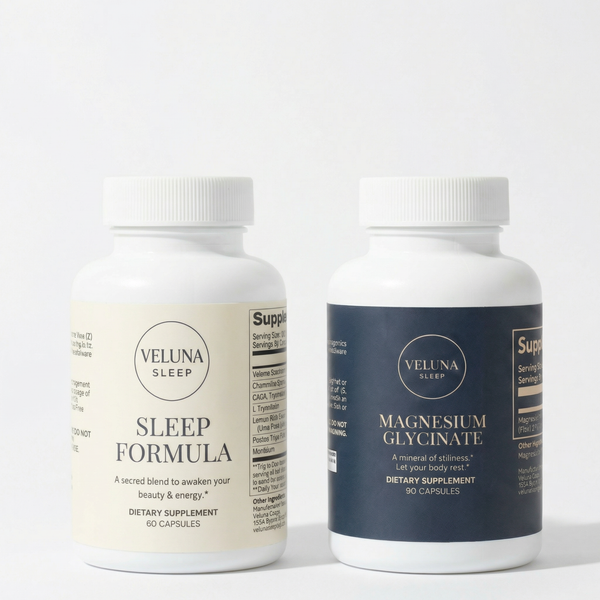
When traveling east, taking melatonin a few hours before your desired bedtime in the new time zone can help you fall asleep earlier. When traveling west, taking melatonin at your desired bedtime in the new time zone can help you adjust to the later sleep schedule. It's important to note that melatonin is most effective when taken at the right time, and the optimal dosage may vary from person to person. Start with a low dose — around 0.5 to 5 mg — and gradually increase as needed. You can also explore Veluna Sleep Formula, which includes melatonin along with other sleep-supporting ingredients. Note that European expert guidance is available for melatonin use in children (Bruni, 2024) [10].
Optimizing Your Sleep Environment
Creating a conducive sleep environment is essential for promoting healthy sleep, especially when traveling across time zones. This includes ensuring that your bedroom is dark, quiet, and cool. Use blackout curtains or an eye mask to block out light, and earplugs or a white noise machine to minimize noise. A comfortable room temperature — ideally between 60 and 67 degrees Fahrenheit — can also improve sleep quality.
In addition to optimizing your sleep environment, establishing a relaxing bedtime routine can help you wind down and prepare for sleep. This could include taking a warm bath or shower [5], reading a book, or practicing relaxation techniques such as meditation or deep breathing. Avoid caffeine and alcohol before bed, as these substances can interfere with sleep. Consider supplements like Veluna Magnesium Glycinate, which can promote relaxation.
Take our 60-second quiz to discover the science-backed sleep solution matched to your unique needs.
Take the QuizThe Importance of Consistent Sleep Schedules
Maintaining a consistent sleep schedule, even when traveling, can minimize the disruptive effects of time zone changes. Try to go to bed and wake up at the same time each day, even on weekends. This helps to regulate your circadian rhythm and promote healthy sleep. A consistent sleep schedule reinforces your body's natural sleep-wake patterns, making it easier to fall asleep and wake up at the desired times. If you struggle with a consistent sleep schedule, it may be worth exploring Best Time to Wake Up for Your Circadian Rhythm.
When traveling, gradually adjust your sleep schedule in the days leading up to your trip. If you are traveling east, try going to bed and waking up earlier each day. If you are traveling west, try going to bed and waking up later each day. This gradual adjustment can help to minimize the shock to your circadian rhythm when you arrive at your destination. It is equally important to maintain a healthy diet and exercise routine, as these factors can also influence your sleep quality.
Other Strategies for Minimizing Jet Lag
In addition to light exposure, melatonin supplementation, and consistent sleep schedules, several other strategies can help minimize jet lag. Staying hydrated is crucial, as dehydration can exacerbate jet lag symptoms. Drink plenty of water throughout the day, especially during your flight. Avoid alcohol and caffeine, as these substances can dehydrate you and interfere with sleep.
Regular exercise can also help to improve sleep quality and reduce jet lag symptoms. Try to incorporate some physical activity into your daily routine, even when traveling. This could include going for a walk, doing some stretching, or hitting the gym. However, avoid strenuous exercise close to bedtime, as this can interfere with sleep. A study found that ashwagandha root extract improved sleep in healthy volunteers (Langade, 2021) [8].
Research discussed here relates to individual ingredients and does not establish that the finished Veluna product has been clinically studied or will produce the same results.
When to Seek Professional Help
While most cases of jet lag are temporary and resolve on their own, some individuals may experience more severe or persistent symptoms that require professional help. If you are consistently struggling to adjust to new time zones or experiencing significant sleep disturbances, it may be beneficial to consult with a sleep specialist. They can assess your sleep patterns, identify any underlying sleep disorders, and recommend appropriate treatment options.
It's important to note that certain medical conditions or medications can also affect your sleep and exacerbate jet lag symptoms. If you have any underlying health concerns or are taking medications that may interfere with sleep, discuss these with your doctor before traveling. They can provide personalized advice and recommendations to help you manage your sleep and minimize the impact of time zone changes. Additionally, if you are experiencing symptoms such as excessive daytime sleepiness, difficulty concentrating, or mood changes, it's important to seek professional help to rule out any underlying medical conditions.
The Bottom Line
Adjusting to a new time zone can be challenging, but understanding the science behind your circadian rhythm and implementing effective strategies can minimize the negative effects of jet lag. Strategic light exposure, melatonin supplementation, optimizing your sleep environment, and maintaining a consistent sleep schedule are all valuable tools for promoting healthy sleep when traveling. Remember that individual responses to these strategies may vary, so it's important to experiment and find what works best for you.
By prioritizing your sleep and taking proactive steps to adjust your circadian rhythm, you can minimize the impact of time zone changes and enjoy a more restful and productive travel experience. Remember, sleep quality is also linked to general health as research has shown that sleep quality and duration are correlated with frailty (de Souza, 2025) [6].
Ready to find the right sleep ritual for your needs? Take Veluna's free 60-second quiz to get a personalized recommendation.
References
- Yue JL, Chang XW, Zheng JW et al.. Efficacy and tolerability of pharmacological treatments for insomnia in adults: A systematic review and network meta-analysis. Sleep medicine reviews. 2023. PubMed
- Chambe J, Reynaud E, Maruani J et al.. Light therapy in insomnia disorder: A systematic review and meta-analysis. Journal of sleep research. 2023. PubMed
- Sutanto CN, Loh WW, Kim JE. The impact of tryptophan supplementation on sleep quality: a systematic review, meta-analysis, and meta-regression. Nutrition reviews. 2022. PubMed
- Choi K, Lee YJ, Park S et al.. Efficacy of melatonin for chronic insomnia: Systematic reviews and meta-analyses. Sleep medicine reviews. 2022. PubMed
- Haghayegh S, Khoshnevis S, Smolensky MH et al.. Before-bedtime passive body heating by warm shower or bath to improve sleep: A systematic review and meta-analysis. Sleep medicine reviews. 2019. PubMed
- de Souza ÂMN, Fernandes DPS, Castro IS et al.. Sleep quality and duration and frailty in older adults: a systematic review. Frontiers in public health. 2025. PubMed
- Langade D, Thakare V, Kanchi S et al.. Clinical evaluation of the pharmacological impact of ashwagandha root extract on sleep in healthy volunteers and insomnia patients: A double-blind, randomized, parallel-group, placebo-controlled study. Journal of ethnopharmacology. 2021. PubMed
- Bruni O, Breda M, Nobili L et al.. European expert guidance on management of sleep onset insomnia and melatonin use in typically developing children. European journal of pediatrics. 2024. PubMed
Frequently Asked Questions
The time it takes to adjust to a new time zone varies depending on the individual and the magnitude of the time difference. As a general rule, it takes about one day per time zone crossed to fully adjust. However, some people may adjust more quickly, while others may take longer.
Jet lag symptoms can vary from person to person but often include fatigue, insomnia, difficulty concentrating, digestive issues, headache, and mood changes. The severity of symptoms can depend on the direction and magnitude of the time difference, as well as individual factors such as age and overall health.
There is no definitive answer to whether it is better to arrive early or late when traveling across time zones. Some people prefer to arrive early to give themselves more time to adjust, while others prefer to arrive closer to the start of their planned activities. Ultimately, the best approach depends on individual preferences and circumstances.
Yes, diet can play a role in time zone adjustment. Eating regular meals at the appropriate times in your new time zone can help to regulate your circadian rhythm. Avoiding heavy meals and sugary snacks before bed can also improve sleep quality. Staying hydrated by drinking plenty of water is also important.
Age can affect time zone adjustment, with older adults often experiencing more difficulty adjusting to new time zones compared to younger individuals. This may be due to age-related changes in the circadian rhythm and sleep patterns. Older adults may benefit from taking extra steps to optimize their sleep environment and manage jet lag symptoms.