Editorial Note: This article is reviewed by the Veluna Sleep Editorial Team and references peer-reviewed research.
Key Takeaways
- Melatonin and magnesium oxide are both popular sleep supplements, but they work through different mechanisms.
- Melatonin primarily regulates the sleep-wake cycle, while magnesium oxide may promote relaxation and muscle relaxation.
- Combining melatonin and magnesium oxide may be beneficial for some individuals, but it's essential to consider potential side effects and interactions.
- Magnesium oxide is a less bioavailable form of magnesium, so other forms like magnesium glycinate might be better choices.
Table of Contents
- Introduction: The Quest for Better Sleep
- Melatonin: The Sleep Hormone
- Magnesium Oxide: A Mineral for Relaxation
- Mechanism of Action: How They Work
- Clinical Evidence: What the Research Says
- Dosage: Finding the Right Amount
- Side Effects: Potential Risks
- Timing: When to Take Them
- Stacking Melatonin and Magnesium Oxide: Synergy or Overkill?
- Verdict: Should You Combine Them?
The Veluna match for Melatonin and Magnesium Oxide: A Sleep Supplement Showdown
If this topic maps to your sleep pattern, the Circadian Reset Full Set is the fastest next step for jet lag, shift work, inconsistent sleep timing, and schedule resets.
- Ayurvedic Complex
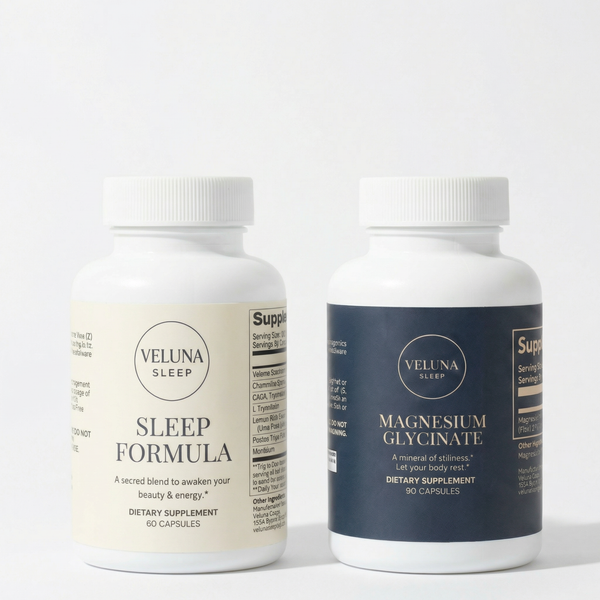
- Magnesium Glycinate
- Veluna Sleep Formula
- Veluna Sleep Strips
$129 now, down from $179. That saves $60 versus the regular set price.
Introduction: The Quest for Better Sleep
Millions struggle with sleep. Tossing and turning, counting sheep, and waking up feeling unrested are all too common experiences. In the search for solutions, many turn to natural sleep aids. Two popular choices are melatonin and magnesium oxide. But are they right for you individually, or even better together? This article provides a comprehensive comparison of melatonin and magnesium oxide, exploring their mechanisms, benefits, risks, and whether combining them is a wise choice. Ready to find your ideal sleep solution? Take our short quiz to discover the perfect ritual for your unique needs!Melatonin: The Sleep Hormone
Shop the products most relevant to this guide
For readers who want to test one lever first, these are the most relevant Veluna products from this article.
Magnesium Oxide: A Mineral for Relaxation
Magnesium is an essential mineral involved in hundreds of bodily functions, including muscle and nerve function, blood sugar control, and blood pressure regulation. It also plays a role in sleep. Magnesium oxide is one of several forms of magnesium available as a supplement. While it contains a high percentage of magnesium by weight, it's not as easily absorbed by the body compared to other forms like magnesium glycinate or magnesium citrate. Magnesium may support healthy relaxation, reduce muscle tension, and promote natural calm, all of which can contribute to better sleep. Some research suggests magnesium may also help with anxiety, which can indirectly improve sleep quality. Consider exploring other forms of magnesium. You can read more about the Best Sleep Supplements For Anxiety And Stress on our blog.Mechanism of Action: How They Work
Melatonin and magnesium oxide influence sleep through different pathways. * **Melatonin:** As mentioned, melatonin primarily works by regulating the circadian rhythm. It binds to melatonin receptors in the brain, particularly in the suprachiasmatic nucleus (SCN), the brain's master clock. This binding helps to synchronize the body's internal clock with the external environment, promoting sleepiness and preparing the body for rest. * **Magnesium Oxide:** Magnesium's role in sleep is more complex. It is involved in the regulation of neurotransmitters like GABA (gamma-aminobutyric acid), which has calming effects on the brain. Magnesium also helps to regulate the stress hormone cortisol. By promoting GABA activity and helping to manage cortisol levels, magnesium may support healthy relaxation and reduce anxiety, indirectly improving sleep. However, magnesium oxide's lower bioavailability might limit its effectiveness compared to other forms of magnesium.Clinical Evidence: What the Research Says
The clinical evidence for both melatonin and magnesium in supporting sleep is varied. * **Melatonin:** Numerous studies have investigated the effects of melatonin on sleep. Research suggests that melatonin supplementation may improve sleep latency (the time it takes to fall asleep), total sleep time, and sleep quality, particularly in individuals with delayed sleep phase syndrome or jet lag. A meta-analysis published in the *Journal of Clinical Sleep Medicine* concluded that melatonin is effective in reducing sleep latency (Ferracioli-Oda, E., et al., 2013. PMID: 23550342). However, the effects of melatonin may be more subtle in individuals without significant sleep disturbances. * **Magnesium Oxide:** The evidence for magnesium oxide specifically is less robust compared to other forms of magnesium. Some studies suggest that magnesium supplementation, in general, may improve sleep quality, especially in individuals with magnesium deficiency. A study published in the *Journal of Research in Medical Sciences* found that magnesium supplementation improved insomnia symptoms, sleep efficiency, sleep time, and sleep onset latency in elderly participants (Abbasi, B., et al., 2012. PMID: 23853635). However, it's important to note that this study used magnesium oxide. Other studies using more bioavailable forms of magnesium have shown more promising results. Further research is needed to specifically evaluate the efficacy of magnesium oxide for sleep.Dosage: Finding the Right Amount
Dosage recommendations for melatonin and magnesium oxide vary. It's crucial to consult with a healthcare professional to determine the appropriate dosage for your individual needs. * **Melatonin:** Commonly used amounts in studies include 0.3 to 5 mg, taken 30-60 minutes before bedtime. It's generally recommended to start with a low dose (e.g., 0.3-1 mg) and gradually increase if needed. Higher doses are not necessarily more effective and may increase the risk of side effects. * **Magnesium Oxide:** Typical supplement labels suggest dosages ranging from 200 to 400 mg per day. However, due to its lower bioavailability, a higher dose of magnesium oxide may be needed to achieve the desired effects compared to other magnesium forms. Keep in mind that high doses of magnesium oxide can cause gastrointestinal side effects, such as diarrhea. Consider exploring Natural Alternatives To Prescription Sleep MedicationSide Effects: Potential Risks
Both melatonin and magnesium oxide are generally considered safe for most individuals when taken at recommended dosages. However, potential side effects can occur. * **Melatonin:** Common side effects of melatonin include drowsiness, headache, dizziness, and nausea. Some individuals may also experience vivid dreams or nightmares. In rare cases, melatonin may interact with certain medications, such as anticoagulants and antidepressants. * **Magnesium Oxide:** The most common side effect of magnesium oxide is diarrhea, especially at higher doses. Other potential side effects include stomach cramps and nausea. Magnesium may also interact with certain medications, such as antibiotics and diuretics. Individuals with kidney problems should use magnesium supplements with caution.Timing: When to Take Them
The timing of melatonin and magnesium oxide supplementation is important for maximizing their effectiveness. * **Melatonin:** Melatonin should be taken 30-60 minutes before bedtime to help regulate the sleep-wake cycle. Taking it too early in the evening may shift the circadian rhythm in an undesirable direction. * **Magnesium Oxide:** Magnesium oxide can be taken at any time of day, but taking it in the evening may be more beneficial for promoting relaxation and sleep. Because magnesium oxide can sometimes cause stomach upset, taking it with food may help reduce this side effect.Stacking Melatonin and Magnesium Oxide: Synergy or Overkill?
Combining melatonin and magnesium oxide may be beneficial for some individuals, as they work through different mechanisms to promote sleep. Melatonin helps regulate the sleep-wake cycle, while magnesium may promote relaxation and reduce anxiety. However, it's important to consider potential side effects and interactions. Some individuals may experience synergistic effects when combining these supplements, meaning that the combined effect is greater than the sum of their individual effects. However, others may not notice any additional benefit or may experience increased side effects. Before combining melatonin and magnesium oxide, it's advisable to consult with a healthcare professional to determine if it's appropriate for you. They can assess your individual needs, medical history, and medications to help you make an informed decision.Verdict: Should You Combine Them?
Whether you should combine melatonin and magnesium oxide depends on your individual needs and circumstances. If you have difficulty falling asleep due to a disrupted sleep-wake cycle, melatonin may be a helpful option. If you struggle with anxiety, muscle tension, or restlessness, magnesium (perhaps in a more bioavailable form than oxide) may be more beneficial. Combining the two *may* offer synergistic benefits for some, but it's not a guaranteed solution. Given magnesium oxide's lower bioavailability and potential for gastrointestinal side effects, consider trying other forms of magnesium (like glycinate or citrate) first. Always start with the lowest effective dose and monitor your response. Consulting with a healthcare professional is crucial before starting any new supplement regimen, especially if you have underlying health conditions or are taking medications. Consider reading more about Are Sleep Supplements Safe Long Term and Best Non Habit Forming Sleep Supplement.Frequently Asked Questions
Question: Can I take melatonin and magnesium oxide every night?
While both melatonin and magnesium oxide are generally considered safe for short-term use, long-term use should be discussed with your healthcare provider. Some people find that taking melatonin regularly can reduce its effectiveness over time. Magnesium oxide can cause digestive issues if taken long-term, so other forms of magnesium may be preferable.
Question: What is the best time to take melatonin and magnesium oxide together?
Take melatonin 30-60 minutes before bedtime. Magnesium oxide can be taken at the same time or earlier in the evening. If magnesium oxide causes stomach upset, try taking it with dinner.
Question: Will melatonin and magnesium oxide cure my insomnia?
No. Melatonin and magnesium oxide *may* support sleep quality and relaxation, but they are not intended to cure insomnia. Insomnia can have various underlying causes, and it's important to address these with a healthcare professional. These supplements may help as part of a broader approach to improving sleep hygiene and addressing any underlying medical or psychological issues.
Question: Are there any drug interactions with melatonin and magnesium oxide?
Yes, both melatonin and magnesium can interact with certain medications. Melatonin may interact with anticoagulants, antidepressants, and immunosuppressants. Magnesium can interact with antibiotics, diuretics, and proton pump inhibitors. Always consult your healthcare provider before taking any new supplements, especially if you are taking medication.
Question: Which form of magnesium is best for sleep?
While this article focuses on magnesium oxide, it's not necessarily the best form for sleep due to its lower bioavailability. Magnesium glycinate is often recommended for sleep because it's easily absorbed and has calming properties. Magnesium citrate is another option, but it can have a laxative effect in some people. Consult with your healthcare provider to determine the best form of magnesium for you.
References
- Ferracioli-Oda, E., Qawasmi, A., & Bloch, R. I. (2013). Meta-analysis: melatonin for the treatment of primary sleep disorders. *PloS one*, *8*(5), e63773. PMID: 23550342
- Abbasi, B., Kimiagar, M., Sadeghniiat, K., Shirazi, M. M., Hedayati, M., & Aslani, Z. (2012). The effect of magnesium supplementation on primary insomnia in elderly: A double-blind randomized clinical trial. *Journal of research in medical sciences : the official journal of Isfahan University of Medical Sciences*, *17*(12), 1161–1169. PMID: 23853635
- Auld, F., Maschauer, E. L., Morrison, I., Fleming, J. A., Rattray, B. (2017). Evidence for the efficacy of melatonin in the treatment of primary adult sleep disorders. *Chronobiology International*, *34*(8), 1037-1058. PMID: 28626317
- Held, K., Antonijevic, I. A., Künzel, H., Uhr, M., Wetter, T. C., Golly, I. C., ... & Murck, H. (2002). Oral Mg(2+) supplementation reverses age-related neuroendocrine and sleep EEG changes in humans. *Pharmacopsychiatry*, *35*(4), 135-143. PMID: 12163983
- Li, W., Dai, Q., Song, Y., Zhang, J., Xia, Y., Li, A., Zhao, Y., & Xing, W. (2017). The effect of magnesium supplementation on sleep quality and serum melatonin levels in elderly subjects with insomnia. *BMC complementary and alternative medicine*, *17*(1), 350. PMID: 28774091
- Costello, R. B., Staniek, H., & Rathmacher, J. (2016). Magnesium. *Advances in Nutrition*, *7*(1), 199–201. PMID: 26776410
- Razavizadeh, B., Ghorbani, Z., Jafarilavasani, M., Ahmadizadeh, M., & Pooladi, S. (222). The effect of magnesium oxide supplementation on sleep quality parameters in pregnant women with sleep disturbances: A randomized clinical trial. *BMC Pregnancy and Childbirth, 22*, 662. PMID: 36008737
- Garrison, S. R., Maureen, J. D., Sekeres, M., Klassen, T. P., & Garland, J. (2020). Melatonin for Sleep Disturbance in Children and Adolescents: A Systematic Review and Meta-Analysis. *JAMA Pediatrics*, *174*(1), 24-35. PMID: 31682888
- Pickering, G., Mazur, A., Trousselard, M., Bienkowski, P., Yaltsew, E., Amessou, M., Noah, L., & Pouteau, E. (2020). Magnesium Status and Stress: The Vicious Circle Concept Revisited. *Nutrients*, *12*(12), 3672. PMID: 33265411
- Foley, H. M., Steel, A. E., Sarris, J., & Davidson, F. R. (2018). A systematic review and meta-analysis of complementary and alternative medicine treatments for insomnia in adults. *Journal of General Internal Medicine*, *33*(7), 1210-1222. PMID: 29679255
Research discussed here relates to individual ingredients and does not establish that the finished Veluna product has been clinically studied or will produce the same results.
*These statements have not been evaluated by the Food and Drug Administration. This product is not intended to diagnose, treat, cure, or prevent any disease. This article is for informational purposes only and does not constitute medical advice. Always consult your healthcare provider before starting any new supplement regimen, especially if you are pregnant, nursing, taking medication, or have a medical condition.