Gamma-aminobutyric acid (GABA) is the primary inhibitory neurotransmitter in the central nervous system. Its principal role is to reduce neuronal excitability throughout the nervous system. This calming effect is precisely why many individuals turn to GABA supplementation when seeking to improve sleep quality. However, the efficacy of GABA for sleep is not solely dependent on its presence but also on its strategic administration. Understanding the optimal timing, dosage, and potential interactions is crucial for harnessing its full potential.
While GABA is naturally produced by the body, exogenous supplementation aims to bolster its levels, potentially leading to a more profound sense of relaxation and a quicker transition to sleep. Research has explored the impact of GABA supplementation on sleep latency, sleep duration, and overall sleep efficiency. A significant aspect of this research focuses on when to take GABA for sleep to align its peak activity with the body's natural sleep-wake cycle. This guide delves into the scientific evidence to provide a comprehensive answer to the question: when to take GABA for sleep?
Understanding GABA's Role in Sleep
GABA's primary function is to inhibit nerve impulses. When GABA binds to its receptors, it decreases the excitability of neurons, effectively acting as a brake on the nervous system. This inhibitory action is vital for regulating anxiety, reducing stress, and promoting a state of calm conducive to sleep. Inadequate GABAergic signaling has been linked to conditions such as anxiety disorders and insomnia.
By supplementing with GABA, individuals aim to increase the availability of this neurotransmitter in the brain. This can help to dampen the overactive neural circuits that often accompany stress and anxiety, making it easier to fall asleep. Studies have indicated that oral administration of GABA can indeed cross the blood-brain barrier to some extent, although the degree of penetration is a subject of ongoing research and may vary between individuals. Nevertheless, its systemic effects on relaxation are well-documented, contributing to its use as a sleep aid.
Optimal Timing for GABA Supplementation
The most widely recommended time to take GABA for sleep is approximately 30 to 60 minutes before bedtime. This timeframe allows for adequate absorption and distribution of the supplement, ensuring that its calming effects are present as you prepare to transition into sleep. The objective is to achieve peak GABA levels in the bloodstream and potentially the brain around the time you wish to fall asleep.
Research supports this timing. For instance, a study published in Food Science and Biotechnology observed that oral GABA intake led to an increase in blood GABA levels within 30 to 60 minutes post-ingestion (Yamatsu, 2016). This suggests that this window is optimal for experiencing the intended relaxation and sleep-promoting effects. Taking it too close to bedtime might mean the peak effect occurs after you have already fallen asleep or are trying to fall asleep, while taking it too early might cause its effects to wane before you are ready to sleep.
It is important to note that individual metabolic rates and absorption capabilities can influence how long GABA takes to kick in. While 30-60 minutes is a general guideline, some individuals may experience effects sooner, while others might require a slightly longer period. Experimentation within this recommended window is often necessary to find the precise timing that works best for your personal sleep cycle and response.
How Long Does GABA Take to Kick In for Sleep?
The onset of action for GABA supplementation for sleep typically falls within the 30 to 60-minute window following ingestion. This is the period during which the supplement is absorbed from the digestive tract into the bloodstream and begins to exert its effects. The exact duration can be influenced by several factors, including the form of GABA taken, whether it's consumed on an empty stomach, and individual digestive processes.
For many, this means that by the time they are settled in bed and winding down, the calming influence of GABA will have begun to take hold. This can manifest as a reduction in racing thoughts, a decrease in feelings of anxiety, and a general sense of physical relaxation. The question of "how long does GABA take to fully kick in?" is also relevant; while initial effects might be felt within the hour, the full impact on promoting sleep onset and maintenance may continue to develop over the subsequent hours of sleep, contributing to a more restorative night.
A 2022 trial in Sleep Medicine Reviews, while not specifically on GABA timing, highlighted the importance of consistent timing for sleep interventions. Although GABA's immediate effects are noticeable, its benefits for sleep quality might also be cumulative, suggesting that consistent daily use, taken at the optimal time, could lead to more profound improvements over time rather than solely relying on acute effects.
GABA Dosage for Sleep: Finding the Right Amount
Determining the appropriate GABA dosage for sleep is a critical aspect of its effective use. While there isn't a universally mandated dosage, clinical studies and anecdotal evidence offer guidance. Common supplemental doses for sleep typically range from 100 mg to 300 mg per night. However, it is generally advised to start with a lower dose and gradually increase it if necessary, allowing your body to adjust and to assess your individual response.
For example, some research has explored the effects of 300 mg of GABA taken daily. A study involving adults with sleep difficulties found that consuming 300 mg of GABA one hour before bed for four weeks appeared to improve subjective sleep quality. Another study demonstrated that 4 weeks of natural GABA extracts (300 mg daily) could improve both subjective sleep quality and objective sleep efficacy (Yoon et al., 2022).
The concept of "GABA dosage for sleep reddit" often surfaces in online discussions. While user experiences can be informative, they should be viewed with caution. Scientific literature suggests that doses between 100 mg and 300 mg are common for sleep support. For individuals experiencing severe anxiety, which can significantly disrupt sleep, higher doses might be considered, but this should always be under the guidance of a healthcare professional. It's crucial to consult with a doctor to determine a safe and effective GABA dosage for sleep, especially if you have pre-existing health conditions or are taking other medications.
Does GABA Increase Deep Sleep?
The impact of GABA supplementation on specific sleep stages, particularly deep sleep (slow-wave sleep), is an area of active research. While GABA's primary role is to promote relaxation and reduce arousal, which can facilitate sleep onset, its direct effect on increasing the duration or intensity of deep sleep is not as definitively established as its effects on sleep latency. However, some studies suggest a positive correlation.
A meta-analysis published in 2019 indicated that GABA supplementation could improve sleep efficiency and reduce sleep latency. While it didn't exclusively focus on deep sleep, improved overall sleep efficiency and reduced awakenings can indirectly lead to more consolidated sleep, which may include more time spent in restorative deep sleep stages. The theory is that by calming the nervous system and reducing the likelihood of disruptive awakenings, GABA allows the body to cycle through sleep stages more smoothly and spend more time in the deeper, more regenerative phases.
Further research, such as studies investigating the effects of GABA on non-rapid eye movement (NREM) sleep, has shown promising results. NREM sleep encompasses light sleep and deep sleep. By promoting a state of calm, GABA may help individuals reach and sustain these restorative stages more effectively. While more direct evidence specifically quantifying the increase in deep sleep is needed, the overall improvement in sleep quality and efficiency observed in studies suggests a potential benefit for this crucial sleep stage.
GABA vs. Melatonin for Sleep
When considering sleep aids, GABA and melatonin are frequently compared. Both are naturally occurring substances that play roles in sleep regulation, but they operate through different mechanisms. Melatonin is a hormone primarily involved in regulating the body's circadian rhythm – the internal clock that signals when it's time to sleep and wake. Supplementing with melatonin can help adjust this internal clock, making it particularly useful for issues like jet lag or shift work disorder.
GABA, as previously discussed, is an inhibitory neurotransmitter that directly calms the nervous system. Its primary action is to reduce neuronal excitability, leading to relaxation and a decrease in anxiety. This makes GABA more suitable for individuals whose sleep difficulties stem from stress, racing thoughts, or general overstimulation. Therefore, it's not a simple case of one being "better" than the other; their efficacy depends on the underlying cause of sleep disturbance.
For instance, if your sleep issues are related to anxiety or a hyperactive mind, GABA might be more directly beneficial. If your problem is more about an irregular sleep-wake cycle or difficulty initiating sleep due to circadian rhythm disruption, melatonin might be the more appropriate choice. Some individuals may even find a synergistic effect when using both, although this should be done cautiously and with professional guidance. A 2021 review in Nutrients discussed the combined use of GABA and melatonin, suggesting potential benefits for sleep quality when used appropriately.
What Should You Not Mix with GABA?
When incorporating GABA supplements into your routine, it's essential to be aware of potential interactions. The most significant consideration is combining GABA with other substances that have sedative or central nervous system depressant effects. This includes alcohol, benzodiazepines (such as Xanax or Valium), barbiturates, and other sedating medications or supplements.
Mixing GABA with these substances can potentiate their sedative effects, leading to excessive drowsiness, impaired coordination, and potentially dangerous respiratory depression. The combined effect could be significantly more potent than either substance taken alone. Therefore, it is strongly advised to avoid concurrent use. If you are taking any prescription medications, especially those affecting the central nervous system, it is imperative to consult with your healthcare provider before taking GABA.
Furthermore, while GABA is generally considered safe, its interaction with certain psychiatric medications warrants caution. For individuals with pre-existing mental health conditions, it's crucial to discuss GABA supplementation with a psychiatrist or therapist to ensure it doesn't interfere with their treatment plan or exacerbate symptoms. The "GABA dosage for severe anxiety" discussions online should always be tempered with the understanding that self-treating severe conditions without professional oversight can be risky.
Factors Influencing GABA's Efficacy and Duration
Several factors can influence how well GABA works for sleep and how long its effects last. Individual metabolism plays a significant role; people process substances at different rates, which can affect absorption and the duration of action. Factors like age, liver function, and overall health can impact this. For some, the effects of GABA may be felt for several hours, supporting sustained sleep, while for others, the duration might be shorter.
The form of GABA supplement can also matter. While most are oral capsules or powders, some products might be formulated for faster absorption or with specific delivery mechanisms. Additionally, the presence of food in the stomach can influence absorption rates. Taking GABA on an empty stomach generally leads to faster absorption, potentially shortening the time it takes to kick in. Conversely, taking it with a meal might delay absorption and prolong the onset of effects.
Consistency in taking GABA is also important, particularly if aiming for long-term sleep improvement. While some users report immediate benefits, a 2022 study in Sleep Medicine suggested that the benefits of GABA might become more pronounced with consistent daily use over several weeks. This implies that while acute effects are observable, the cumulative impact of GABA on sleep architecture and quality may require a period of regular supplementation, typically at the recommended dosage and timing.
GABA for Sleep Chocolate and Other Formulations
The market offers various forms of GABA supplements, including capsules, powders, and even edibles like "GABA for Sleep chocolate." These different formulations cater to diverse preferences and can influence the user experience and potentially the onset and duration of effects. Chocolate-based GABA products often combine GABA with other sleep-promoting ingredients, such as L-theanine or magnesium, and the chocolate itself may contain compounds that contribute to relaxation.
The appeal of edible formats like chocolate is their convenience and palatability, making them an attractive option for those who dislike swallowing pills. However, the absorption and metabolism of GABA from these matrices can differ. The digestive process for solids, especially those containing fats and sugars like chocolate, can be slower compared to rapidly dissolving powders or capsules. This might mean that GABA from chocolate takes a bit longer to kick in, but its effects could potentially be more sustained due to a slower release.
When choosing a GABA supplement, whether it's a traditional capsule, a powder to mix into a drink, or a sleep chocolate, it's advisable to check the ingredient list for purity and any additional compounds. The dosage of GABA will also vary between products, so it's crucial to adhere to the recommended serving size and consult the product's labeling for specific timing instructions. Regardless of the formulation, the core principle of taking it consistently and at an appropriate time before bed remains paramount for optimal sleep support.
Frequently Asked Questions About GABA for Sleep
How long before sleep should I take GABA?
The general recommendation is to take GABA 30 to 60 minutes before bedtime. This timeframe allows for absorption and for the supplement to exert its calming effects as you prepare to sleep.
What should you not mix with GABA?
You should avoid mixing GABA with other central nervous system depressants such as alcohol, benzodiazepines, and sedating medications. This combination can lead to excessive drowsiness and other serious side effects.
How long does GABA take to kick in?
GABA typically starts to take effect within 30 to 60 minutes after ingestion. This is when its calming and relaxation-promoting properties are generally felt.
Is GABA better than melatonin for sleep?
It depends on the cause of your sleep issues. Melatonin is primarily for regulating circadian rhythms, while GABA directly calms the nervous system. GABA may be more effective for sleep disturbances due to anxiety or stress, whereas melatonin is better for issues with sleep timing.
Does GABA increase deep sleep?
While research is ongoing, some studies suggest that GABA supplementation may improve sleep efficiency and reduce awakenings, which can indirectly lead to more consolidated sleep, potentially including increased time in deep sleep stages. However, direct evidence for a significant increase in deep sleep is still developing.
How long does GABA take to fully kick in?
While initial effects are usually noticeable within 30-60 minutes, the full impact on sleep quality and duration might continue to develop over the course of the night. For some, the benefits may also become more pronounced with consistent daily use over several weeks.
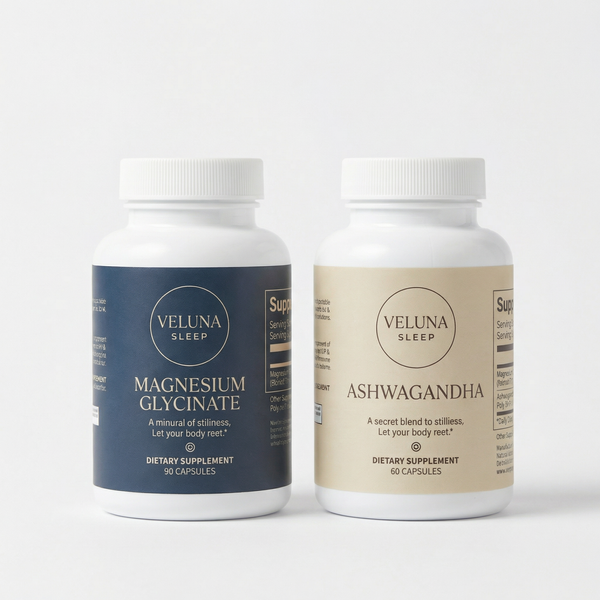
Understanding the nuances of when to take GABA for sleep is key to unlocking its potential benefits. By adhering to the recommended timing of 30-60 minutes before bed, starting with an appropriate GABA dosage for sleep, and being mindful of potential interactions, you can optimize its use. For those seeking a comprehensive approach to sleep, exploring complementary supplements like magnesium glycinate or adopting robust sleep hygiene practices can further enhance your journey towards more restorative rest.
Discover our range of sleep-supporting products:
Explore our sleep hygiene hub for more tips:
Recommended Veluna products for this topic:
- Deep Restore Starter Set — our complete deep-sleep starter kit.