Key Takeaways
✓ Irregular sleep patterns, including those on weekends, can disrupt your circadian rhythm and affect overall health (Zhou, 2025).
✓ While some catch-up sleep on weekends may offer short-term relief, it doesn't fully compensate for sleep deprivation during the week (Zhou, 2025).
✓ Maintaining a consistent sleep schedule, even on weekends, is crucial for regulating your body's natural sleep-wake cycle and promoting better sleep quality.
The Weekend Sleep Dilemma: Catching Up or Causing Chaos?
Weekends: a time for relaxation, recreation, and, for many, a chance to finally catch up on sleep. But is this weekend sleep schedule actually beneficial, or could it be doing more harm than good? The answer, as with many things related to sleep, lies in the complex workings of your circadian rhythm. Your circadian rhythm is your body’s internal clock, regulating everything from sleep and wakefulness to hormone release and body temperature.
When you consistently deviate from a regular sleep schedule — sleeping in late on weekends, for example — you can disrupt this delicate system. This disruption can lead to a phenomenon known as social jetlag, where your body clock is essentially out of sync with your social schedule. So, before you decide to sleep in until noon on Saturday, let’s delve into what circadian science says about weekend sleep schedules and how to optimize your sleep for better health.
Understanding Your Circadian Rhythm
Your circadian rhythm is a roughly 24-hour cycle that governs various physiological processes. Light exposure is the primary driver of this rhythm, signaling to your brain when it’s time to be awake and when it’s time to sleep. This light-dark cycle influences the production of melatonin, a hormone that promotes sleepiness, and cortisol, a hormone that promotes alertness. When you maintain a consistent sleep schedule, you reinforce this natural rhythm, making it easier to fall asleep and wake up at regular times.
However, irregular sleep patterns can throw your circadian rhythm off balance. This can lead to a host of problems, including insomnia, fatigue, mood disturbances, and even metabolic issues. Think of your circadian rhythm as an orchestra conductor. When everyone is playing in sync, the music sounds harmonious. But when some musicians are offbeat, the whole performance suffers. Similarly, when your circadian rhythm is disrupted, your body's various systems can’t function as efficiently.
The Allure and Pitfalls of Catch-Up Sleep
The idea of catching up on sleep during the weekend is tempting, especially after a week of early wake-up calls and late nights. Research suggests that some catch-up sleep can indeed provide short-term benefits, such as improved alertness and cognitive function (Zhou, 2025). However, it's crucial to understand that weekend sleep binges don't fully erase the effects of chronic sleep deprivation.
One of the main issues with catch-up sleep is that it can further disrupt your circadian rhythm. When you sleep in late on weekends, you’re essentially shifting your body clock later. This can make it harder to fall asleep at your desired bedtime on Sunday night, leading to a cycle of sleep deprivation and weekend catch-up. It's like constantly resetting your watch — you might know the correct time for a brief period, but you're never truly in sync with the actual time zone. If you find yourself struggling to fall asleep, consider exploring techniques to promote relaxation, such as those discussed in our article on Why Can't I Sleep Even Though I'm Tired? Causes & Solutions.
Social Jetlag: The Weekend Sleep Saboteur
Social jetlag refers to the discrepancy between your body's natural sleep-wake cycle and your social or work schedule. It's similar to the jetlag you experience when traveling across time zones, but it's caused by your own inconsistent sleep habits. Sleeping in late on weekends is a primary driver of social jetlag.
The consequences of social jetlag can be significant. Studies have linked it to increased risk of obesity, diabetes, heart disease, and mood disorders (Zhou, 2025). When your circadian rhythm is constantly disrupted, your body struggles to regulate blood sugar, blood pressure, and hormone levels. Over time, this can lead to chronic health problems. Minimizing social jetlag involves maintaining a consistent sleep schedule, even on weekends. This means waking up and going to bed at roughly the same times each day, regardless of whether it’s a weekday or a weekend. For those working non-traditional hours, our guide on Sleep Optimization for Shift Workers: A Complete Guide offers strategies to mitigate circadian disruption.
Take our 60-second quiz to discover the science-backed sleep solution matched to your unique needs.
Take the QuizStrategies for a Healthier Weekend Sleep Schedule
So, how can you enjoy your weekends without wreaking havoc on your sleep? Here are some evidence-based strategies:
- Limit sleep extension: Aim to wake up no more than one to two hours later than your weekday wake time. This minimizes the shift in your circadian rhythm.
- Maintain a consistent bedtime: Try to go to bed at roughly the same time each night, even on weekends. This helps reinforce your body's natural sleep-wake cycle.
- Prioritize morning light exposure: Expose yourself to bright light early in the morning, especially on weekends. This helps to reset your circadian rhythm and promote alertness. You can also consider light therapy. Light therapy has been shown to be effective in improving sleep quality for those with insomnia (Chambe, 2023).
- Avoid late-night meals and alcohol: Eating a large meal or drinking alcohol close to bedtime can disrupt your sleep. Aim to finish eating at least two to three hours before bed.
- Create a relaxing bedtime routine: Establish a consistent bedtime routine to signal to your body that it’s time to sleep. This could include taking a warm bath (Haghayegh, 2019), reading a book, or practicing relaxation techniques.
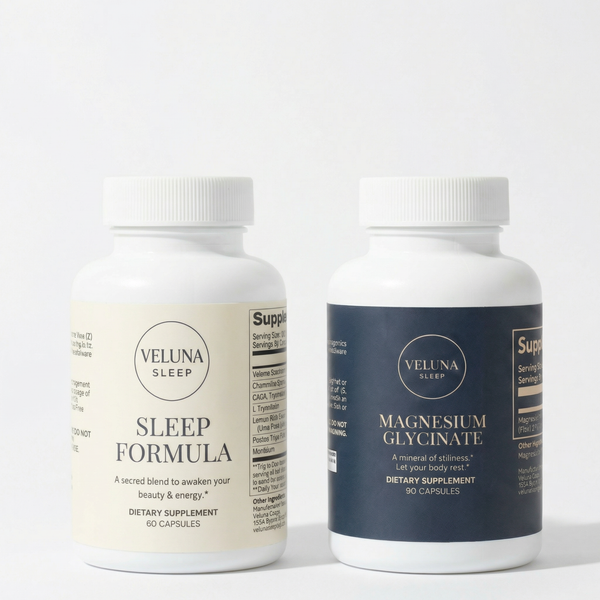
Sometimes, despite your best efforts, you might still struggle with sleep. In such cases, certain supplements can be helpful. Magnesium glycinate, for instance, supports relaxation and sleep quality.
The Role of Melatonin and Other Sleep Aids
Melatonin is a hormone that plays a crucial role in regulating your sleep-wake cycle. Your brain produces more melatonin in the evening, signaling to your body that it’s time to sleep. However, factors like blue light exposure from screens can suppress melatonin production, making it harder to fall asleep. This is why managing your exposure to blue light is important.
While melatonin supplements can be helpful for some people, it's essential to use them judiciously. Research suggests that melatonin can be effective for treating primary sleep disorders (Choi, 2022; Ferracioli-Oda, 2013), but it's not a magic bullet for everyone. The optimal dosage and timing of melatonin supplementation can vary depending on individual factors. Other supplements, such as tryptophan (Sutanto, 2022) and ashwagandha (Langade, 2021), have also been studied for their potential sleep-promoting effects.
It's crucial to consult with a healthcare professional before taking any sleep supplements, especially if you have underlying health conditions or are taking other medications. And remember, supplements are most effective when combined with healthy sleep habits and a consistent sleep schedule. For a comprehensive approach, consider exploring the Circadian Reset Ritual, which combines multiple strategies for optimizing your sleep-wake cycle.
When to Seek Professional Help
If you consistently struggle with sleep, despite implementing healthy sleep habits, it may be time to seek professional help. Insomnia and other sleep disorders can have a significant impact on your overall health and well-being. A healthcare provider can help you identify any underlying medical conditions or lifestyle factors that may be contributing to your sleep problems.
They may recommend a sleep study to evaluate your sleep patterns and identify any potential sleep disorders, such as sleep apnea or restless legs syndrome. Treatment options for sleep disorders can include cognitive behavioral therapy for insomnia (CBT-I), medication, or other therapies. Acupuncture may also be considered as a complementary therapy for insomnia, particularly in specific patient populations (Zhang, 2023). It's important to remember that sleep problems are treatable, and seeking professional help can significantly improve your sleep quality and overall health.
The Bottom Line
While the allure of catching up on sleep during the weekend is strong, it's crucial to understand the potential impact on your circadian rhythm. Irregular sleep patterns can disrupt your body's natural sleep-wake cycle, leading to social jetlag and a host of health problems. Maintaining a consistent sleep schedule, even on weekends, is essential for regulating your circadian rhythm and promoting better sleep quality.
By prioritizing healthy sleep habits, such as limiting sleep extension, maintaining a consistent bedtime, and exposing yourself to morning light, you can enjoy your weekends without sacrificing your sleep. Remember, sleep is a fundamental pillar of health, and prioritizing it is an investment in your overall well-being. Poor sleep can also affect hormone balance, so consider reading our article on Sleep and Hormone Balance: How Sleep Affects Your Hormones.
Ready to find the right sleep ritual for your needs? Take Veluna's free 60-second quiz to get a personalized recommendation.
References
- Yue JL, Chang XW, Zheng JW et al.. Efficacy and tolerability of pharmacological treatments for insomnia in adults: A systematic review and network meta-analysis. Sleep medicine reviews. 2023. PubMed
- Chambe J, Reynaud E, Maruani J et al.. Light therapy in insomnia disorder: A systematic review and meta-analysis. Journal of sleep research. 2023. PubMed
- Sutanto CN, Loh WW, Kim JE. The impact of tryptophan supplementation on sleep quality: a systematic review, meta-analysis, and meta-regression. Nutrition reviews. 2022. PubMed
- Choi K, Lee YJ, Park S et al.. Efficacy of melatonin for chronic insomnia: Systematic reviews and meta-analyses. Sleep medicine reviews. 2022. PubMed
- Haghayegh S, Khoshnevis S, Smolensky MH et al.. Before-bedtime passive body heating by warm shower or bath to improve sleep: A systematic review and meta-analysis. Sleep medicine reviews. 2019. PubMed
- Zhou Y, Xue F. Can weekend catch-up sleep repay the sleep debt? Balancing short-term relief with long-term risks. Sleep & breathing = Schlaf & Atmung. 2025. PubMed
- Langade D, Thakare V, Kanchi S et al.. Clinical evaluation of the pharmacological impact of ashwagandha root extract on sleep in healthy volunteers and insomnia patients: A double-blind, randomized, parallel-group, placebo-controlled study. Journal of ethnopharmacology. 2021. PubMed
- Ferracioli-Oda E, Qawasmi A, Bloch MH. Meta-analysis: melatonin for the treatment of primary sleep disorders. PloS one. 2013. PubMed
- Zhang J, Qin Z, So TH et al.. Acupuncture for chemotherapy-associated insomnia in breast cancer patients: an assessor-participant blinded, randomized, sham-controlled trial. Breast cancer research : BCR. 2023. PubMed
Frequently Asked Questions
While occasional sleep extension on weekends might seem harmless, consistently sleeping in late can disrupt your circadian rhythm. This disruption can lead to social jetlag, making it harder to fall asleep during the week and potentially increasing the risk of various health problems.
As a general rule, try to wake up no more than one to two hours later than your weekday wake time. This minimizes the shift in your circadian rhythm and reduces the risk of social jetlag. Consistency is key for maintaining a healthy sleep-wake cycle.
To reset your sleep schedule, prioritize morning light exposure, maintain a consistent bedtime, and avoid late-night meals and alcohol. You might also consider using a sleep mask to block out light and promote melatonin production. If needed, consult with a healthcare professional for personalized advice.
Melatonin supplements can be helpful for some people in regulating their sleep schedule, particularly when dealing with jetlag or shift work. However, it's essential to use them judiciously and consult with a healthcare professional before taking any supplements. Other supplements, such as magnesium and tryptophan, may also support sleep quality.
Sticking to your weekday sleep schedule is generally better for your overall health and well-being. While some catch-up sleep may provide short-term benefits, it doesn't fully compensate for chronic sleep deprivation and can disrupt your circadian rhythm. Aim for consistency in your sleep-wake cycle to optimize your sleep quality.