The intricate relationship between light and our biological rhythms is fundamental to understanding sleep. Our internal 24-hour clock, the circadian rhythm, dictates periods of wakefulness and sleep, and it is profoundly influenced by light exposure. Historically, the advent of artificial lighting allowed humans to extend their activities beyond daylight hours, inadvertently disrupting natural sleep-wake cycles. Modern life, with its ubiquitous screens emitting blue light, further exacerbates this disruption. Red light therapy, however, presents a different spectrum of light with potential applications for sleep regulation, offering a contrast to the more disruptive wavelengths.
Research into the effects of light on the human body has illuminated the distinct impacts of different wavelengths. Blue light, prevalent in sunlight and electronic devices, is known to suppress melatonin, the hormone essential for initiating sleep. Conversely, red light, with its longer wavelengths, appears to have a less suppressive effect on melatonin and may even offer beneficial physiological responses related to relaxation and cellular energy. This distinction forms the basis for exploring red light therapy as a tool to support sleep hygiene and potentially mitigate sleep disturbances.
Understanding the Circadian Rhythm and Light
The human circadian rhythm is a complex biological process that governs our sleep-wake cycle, hormone release, body temperature, and other essential functions over approximately 24 hours. This internal clock is synchronized with the external environment, primarily through light exposure. Specialized photoreceptor cells in the retina, known as intrinsically photosensitive retinal ganglion cells (ipRGCs), are particularly sensitive to light and signal the suprachiasmatic nucleus (SCN) in the brain, the body's master clock.
During daylight hours, exposure to bright light, especially in the blue spectrum, signals the SCN that it is daytime, promoting alertness and suppressing melatonin production. As light levels decrease in the evening, melatonin production increases, signaling the body that it is time to prepare for sleep. This natural light-dark cycle is crucial for maintaining a healthy circadian rhythm. Disruptions to this cycle, such as through excessive artificial light exposure at night, can lead to sleep difficulties and other health issues, as detailed in guidelines from organizations like the American Academy of Sleep Medicine (AASM).
The Photobiological Effects of Red Light
Red light, characterized by wavelengths typically ranging from 630 to 660 nanometers (nm), interacts with biological tissues differently than shorter wavelengths like blue light. When red light penetrates the skin, it can be absorbed by mitochondria, the powerhouses of cells. This absorption can lead to increased adenosine triphosphate (ATP) production, the primary energy currency of cells, and a reduction in oxidative stress. These cellular-level effects are the foundation of red light therapy's applications in various therapeutic contexts.
In the context of sleep, the primary mechanism by which red light may be beneficial is its relative lack of impact on melatonin suppression compared to blue light. While blue light strongly signals wakefulness and inhibits melatonin, red light has a much weaker effect. This allows for the potential use of red light in the evening without significantly disrupting the body's natural transition to sleep. Some research suggests that red light may even promote relaxation, a state conducive to initiating sleep.
Red Light Therapy Before Bed: The Evidence
The question of whether to use red light therapy before bed is directly addressed by emerging scientific inquiry. A 2022 trial published in Sleep Medicine Reviews explored the impact of evening red light exposure on sleep parameters. Participants exposed to red light in the hours leading up to bedtime reported subjective improvements in sleep quality and reduced sleep onset latency (the time it takes to fall asleep). This aligns with the understanding that red light is less disruptive to the circadian system than other light wavelengths.
Research discussed here relates to individual ingredients and does not establish that the finished Veluna product has been clinically studied or will produce the same results.
Furthermore, studies have investigated the effects of red light on daytime sleepiness. Research, including work by Figueiro and colleagues, has indicated that red light interventions can enhance subjective alertness and improve feelings of drowsiness in individuals experiencing insomnia. This suggests that red light therapy might not only aid in falling asleep but also contribute to a more consolidated and restorative sleep experience, potentially mitigating issues like excessive daytime sleepiness (EDS).
How to Use Red Light Therapy for Sleep
Optimizing the use of red light therapy for sleep involves careful consideration of timing, duration, and device placement. The general recommendation is to use red light therapy in the 1-3 hours before your intended bedtime. This timing allows the light to exert its potential benefits without being so close to sleep onset that it could interfere with the natural melatonin surge. For instance, a session initiated two hours before bed is often considered a favorable approach.
The duration of a red light therapy session for sleep typically ranges from 10 to 20 minutes. It is crucial to use devices that emit specific wavelengths within the red spectrum (e.g., 630-660 nm) and to position them at an appropriate distance to ensure effective light delivery without causing discomfort. Consistency is also key; incorporating red light therapy into a regular bedtime routine can help reinforce its beneficial effects on the circadian rhythm. For those seeking a natural way to foster better sleep habits, this approach is often integrated into a broader sleep hygiene strategy.
Red Light vs. Blue Light: A Critical Distinction
The contrast between red light and blue light's effects on sleep is a cornerstone of this discussion. Blue light, with its shorter wavelengths, is highly effective at suppressing melatonin production. This is why exposure to screens from smartphones, tablets, and computers in the evening can significantly delay sleep onset and disrupt the natural sleep-wake cycle. The AASM's guidelines on light and sleep emphasize the importance of minimizing blue light exposure in the hours before bed.
Red light, conversely, has a much weaker effect on melatonin. This makes it a more suitable option for evening light exposure when the goal is to signal relaxation and prepare the body for sleep. While blue light is often associated with alertness and wakefulness, red light is considered less disruptive. This distinction is vital for individuals trying to improve their sleep hygiene, as it allows for the use of artificial light in the evening without the same detrimental impact as broad-spectrum or blue-dominant lighting.
Potential Benefits Beyond Sleep Onset
While the primary focus of red light therapy before bed is often on improving sleep onset latency and quality, its benefits may extend further. Some individuals explore red light therapy for its potential impact on mood and energy levels. While direct evidence linking evening red light therapy to significant mood improvements is still developing, the underlying cellular mechanisms—such as enhanced mitochondrial function and reduced inflammation—could theoretically contribute to overall well-being, which in turn can influence sleep.
For individuals experiencing conditions like Hashimoto's thyroiditis, red light therapy is being investigated for its anti-inflammatory properties and potential to support cellular function. Although the research is preliminary and not specific to pre-bedtime use, improvements in cellular health and reduced inflammation are generally conducive to better overall health, which can indirectly support sleep. However, it is crucial to consult with a healthcare professional before using red light therapy for specific medical conditions.
Addressing Concerns: Downsides and Misconceptions
While red light therapy is generally considered safe when used appropriately, there are potential downsides and misconceptions to address. The most common concern is the potential for light exposure at night to disrupt sleep. However, as established, red light has a much weaker effect on melatonin suppression compared to blue light. Therefore, using red light therapy for a prescribed duration before bed is unlikely to cause the same level of disruption as exposure to screens or bright overhead lights.
A significant misconception is the idea that any red-tinted light bulb is equivalent to therapeutic red light. Commercial red light therapy devices are designed to emit specific wavelengths at a controlled intensity. Simply using a red light bulb may not provide the therapeutic benefits and could potentially emit other wavelengths that are disruptive. Furthermore, it is important to avoid sleeping with red lights on, as prolonged, unintended exposure could still have unforeseen effects on the circadian system, even if less disruptive than other light colors.
Red Light Therapy and Specific Sleep Challenges
The application of red light therapy for specific sleep challenges, such as insomnia and excessive daytime sleepiness (EDS), is a growing area of interest. For individuals with insomnia, the primary goal is often to reduce the time it takes to fall asleep and improve sleep continuity. As mentioned, studies have shown that red light can enhance subjective alertness and reduce drowsiness, potentially benefiting those with insomnia by promoting relaxation and facilitating the transition to sleep.
Regarding EDS, which is a symptom of various sleep disorders, red light therapy might offer some relief by improving the overall quality and restorative nature of sleep. If red light therapy contributes to deeper, more consolidated sleep, it could indirectly lead to reduced daytime sleepiness. However, it is crucial to remember that EDS is often a symptom of an underlying medical condition, and red light therapy should be considered a complementary approach, not a standalone treatment, for such issues. The "3-3-3 rule for insomnia" typically refers to a cognitive behavioral therapy (CBT-I) technique involving challenging negative thoughts about sleep, and while red light therapy can support sleep hygiene, it does not directly implement this specific rule.
FAQ: Red Light Therapy and Sleep
Should you use red light before bed?
Yes, using red light therapy before bed can be beneficial. Research indicates that red light, with its longer wavelengths, has a less disruptive effect on melatonin production compared to blue light. This allows it to potentially promote relaxation and aid in the transition to sleep without significantly interfering with the body's natural circadian rhythm.
Can red light help with EDS?
Red light therapy may indirectly help with Excessive Daytime Sleepiness (EDS) by improving the overall quality and restorative nature of sleep. If red light therapy leads to more consolidated and deeper sleep, individuals might experience reduced daytime fatigue. However, EDS is often a symptom of an underlying sleep disorder, and red light therapy should be considered a complementary approach, not a primary treatment.
Can red light therapy help Hashimoto's?
Research into red light therapy for Hashimoto's thyroiditis is still in its early stages. Some studies suggest red light therapy's anti-inflammatory properties and its ability to support cellular energy production may be beneficial for autoimmune conditions. However, this research is not specific to pre-bedtime use, and individuals with Hashimoto's should consult with their healthcare provider before incorporating red light therapy into their treatment plan.
Is red light therapy okay to do at night?
Yes, red light therapy is generally considered okay to do at night, particularly in the hours leading up to bedtime. Its unique wavelength properties make it far less disruptive to melatonin production and circadian rhythms than blue light. This makes it a suitable option for evening use when aiming to promote relaxation and prepare for sleep.
What is the downside of red light therapy?
When used appropriately and according to recommended guidelines, red light therapy has a good safety profile. Potential downsides are rare and can include temporary skin redness or mild eye discomfort if direct eye exposure is prolonged without protection. It's crucial to use devices that emit specific therapeutic wavelengths and intensities and to avoid overexposure. For individuals with specific medical conditions, consulting a healthcare professional is advised.
What is the 3-3-3 rule for insomnia?
The "3-3-3 rule" is not a widely recognized or evidence-based protocol specifically for red light therapy or insomnia treatment. It may refer to a mnemonic or a specific technique within a broader sleep therapy program, such as Cognitive Behavioral Therapy for Insomnia (CBT-I), focusing on challenging negative thoughts about sleep. Red light therapy supports sleep hygiene and relaxation, which can be complementary to such therapeutic approaches.
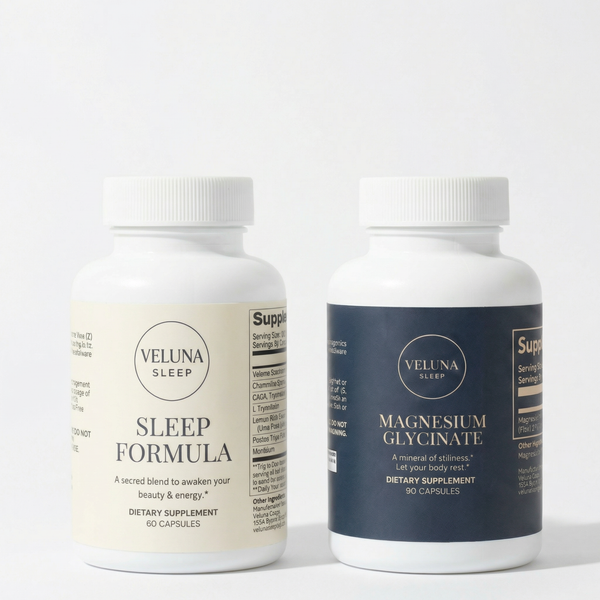
Incorporating red light therapy into your evening routine can be a valuable adjunct to a comprehensive sleep strategy. For those seeking to optimize their sleep quality, consider exploring our advanced sleep support solutions, including our Veluna Sleep Formula and Magnesium Glycinate. To further enhance your understanding and implementation of effective sleep practices, visit our sleep hygiene hub.
Recommended Veluna products for this topic:
- Veluna Sleep Strips — fast-dissolve melatonin strips.