Editorial Note: This article is reviewed by the Veluna Sleep Editorial Team and references peer-reviewed research.
Key Takeaways
- Magnesium threonate is a specific form of magnesium that may be more effective at crossing the blood-brain barrier.
- Preliminary research suggests magnesium threonate may support relaxation and reduce feelings of anxiety, potentially improving sleep quality.
- The benefits of magnesium threonate extend beyond sleep, potentially offering cognitive and mood support.
- Individual results may vary, and it's crucial to consult with a healthcare professional before starting any new supplement.
Table of Contents
- Understanding Anxiety, Insomnia, and the Magnesium Connection
- What is Magnesium Threonate and How Does It Work?
- The Potential Benefits of Magnesium Threonate for Anxiety
- Magnesium Threonate and Its Impact on Sleep Quality
- Maximizing the Benefits: Dosage, Timing, and Safety
- Combining Magnesium Threonate with Other Sleep-Promoting Strategies
- Choosing a High-Quality Magnesium Threonate Supplement
The Veluna match for Magnesium Threonate for Anxiety & Insomnia: Unlocking the Benefits
If this topic maps to your sleep pattern, the Mind Calm Starter Set is the fastest next step for racing thoughts, bedtime stress, and mental overstimulation.
- Ashwagandha
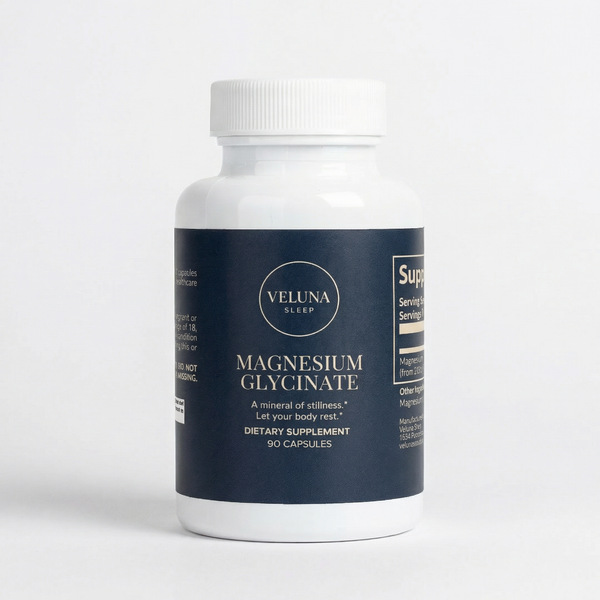
- Magnesium Glycinate
$79 now, down from $89. That saves $8 versus the regular set price.
Understanding Anxiety, Insomnia, and the Magnesium Connection
Anxiety and insomnia often go hand-in-hand, creating a frustrating cycle where worry keeps you awake, and lack of sleep exacerbates anxiety. Millions struggle with this daily, seeking effective and natural ways to manage both. Magnesium, an essential mineral involved in hundreds of bodily functions, has emerged as a potential ally in this fight. It plays a crucial role in nerve function, muscle relaxation, and the regulation of neurotransmitters like GABA, which promotes calm and reduces excitability in the brain. A deficiency in magnesium may contribute to increased anxiety and difficulty falling or staying asleep. Addressing this deficiency through diet or supplementation may offer benefits for both anxiety and insomnia. Consider exploring Sleep Rituals Vs Single Supplements Why Combinations Work for a more holistic approach.What is Magnesium Threonate and How Does It Work?
Shop the products most relevant to this guide
For readers who want to test one lever first, these are the most relevant Veluna products from this article.
The Potential Benefits of Magnesium Threonate for Anxiety
The potential anxiolytic (anxiety-reducing) effects of magnesium threonate are linked to its ability to modulate neurotransmitter activity and support healthy brain function. Research suggests that magnesium plays a role in regulating the hypothalamic-pituitary-adrenal (HPA) axis, the body's primary stress response system. When the HPA axis is overactive, it can lead to chronic stress and anxiety. Magnesium may help to dampen the HPA axis, promoting a more balanced stress response. Furthermore, magnesium is involved in the production and function of GABA, a neurotransmitter that has calming effects on the brain. By increasing GABA activity, magnesium may help to reduce feelings of anxiety and promote relaxation. Preliminary evidence indicates that magnesium supplementation may be beneficial for individuals experiencing mild to moderate anxiety symptoms. [PMID: 28654968] It's important to note that while these findings are promising, more research is needed to fully understand the extent of magnesium threonate's benefits for anxiety. However, the existing evidence suggests that it may be a helpful tool for supporting healthy relaxation and managing everyday stress.Magnesium Threonate and Its Impact on Sleep Quality
Beyond its potential anxiety-reducing effects, magnesium threonate may also contribute to improved sleep quality. Magnesium plays a vital role in regulating sleep-wake cycles by influencing the production of melatonin, the hormone that regulates sleep. A deficiency in magnesium may disrupt melatonin production, leading to difficulty falling asleep or staying asleep. Magnesium also helps to relax muscles, which can be beneficial for individuals who experience restless legs syndrome or muscle cramps that interfere with sleep. By promoting muscle relaxation and supporting healthy melatonin production, magnesium threonate may help to improve sleep onset, duration, and overall sleep quality. Some studies have explored the effects of magnesium supplementation on sleep. For example, research suggests that magnesium supplementation may improve sleep efficiency, increase sleep time, and reduce sleep latency (the time it takes to fall asleep) in older adults with insomnia. [PMID: 12163983] Another study indicated that magnesium supplementation may improve sleep quality in individuals with restless legs syndrome. [PMID: 9863924] While more research is needed specifically on magnesium threonate's impact on sleep, the existing evidence suggests that it may be a valuable tool for supporting restful sleep. You might also find our article on Does Magnesium Threonate Help With Insomnia helpful.Maximizing the Benefits: Dosage, Timing, and Safety
When considering magnesium threonate supplementation, it's important to understand the recommended dosage, timing, and potential side effects. While there is no universally agreed-upon optimal dosage, commonly used amounts in studies include 144mg of elemental magnesium from magnesium-L-threonate. Typical supplement labels suggest taking the recommended dose in the evening, about 1-2 hours before bedtime, to promote relaxation and sleep. Magnesium threonate is generally considered safe for most individuals when taken as directed. However, some people may experience mild side effects such as diarrhea, nausea, or stomach cramps, especially at higher doses. It's always best to start with a lower dose and gradually increase it as tolerated. Magnesium can interact with certain medications, such as antibiotics, diuretics, and proton pump inhibitors. Therefore, it's crucial to consult with your healthcare provider before starting magnesium threonate supplementation, especially if you are taking any medications or have any underlying health conditions.Combining Magnesium Threonate with Other Sleep-Promoting Strategies
While magnesium threonate may offer benefits for anxiety and sleep, it's most effective when combined with other healthy lifestyle habits. Creating a relaxing bedtime routine, practicing good sleep hygiene, and managing stress can all contribute to improved sleep quality. Some helpful sleep-promoting strategies include: * **Establishing a consistent sleep schedule:** Going to bed and waking up at the same time each day, even on weekends, helps to regulate your body's natural sleep-wake cycle. * **Creating a relaxing bedtime routine:** Taking a warm bath, reading a book, or listening to calming music can help to prepare your mind and body for sleep. * **Optimizing your sleep environment:** Make sure your bedroom is dark, quiet, and cool. * **Avoiding caffeine and alcohol before bed:** These substances can interfere with sleep. * **Practicing relaxation techniques:** Deep breathing exercises, meditation, or yoga can help to reduce stress and promote relaxation. Consider exploring other natural sleep aids like L-Theanine or Ashwagandha. See our guide to Ashwagandha For Athletes Complete Guide for more insights.Choosing a High-Quality Magnesium Threonate Supplement
When selecting a magnesium threonate supplement, it's important to choose a reputable brand that uses high-quality ingredients and follows good manufacturing practices (GMP). Look for supplements that have been third-party tested for purity and potency. This ensures that the supplement contains the stated amount of magnesium threonate and is free from contaminants. Pay attention to Supplement Quality 101 Gmp Third Party Testing And Coas for more details. Also, consider the form of magnesium threonate used in the supplement. Some supplements may contain a combination of magnesium threonate and other forms of magnesium. While this may not be harmful, it's important to be aware of the different forms and their potential effects. Finally, read reviews from other customers to get an idea of their experiences with the supplement. While individual results may vary, customer reviews can provide valuable insights into the effectiveness and tolerability of the product.Frequently Asked Questions
Question: Can magnesium threonate cure anxiety or insomnia?
Magnesium threonate is a dietary supplement and is not intended to cure, treat, diagnose, or prevent any disease. Research suggests it may support relaxation and healthy sleep patterns, but individual results can vary. It is best used in conjunction with other healthy lifestyle habits.
Question: How long does it take for magnesium threonate to work?
Some people may notice a difference in their anxiety and sleep within a few days of starting magnesium threonate, while others may take several weeks to experience the full benefits. Consistency is key. It's important to take the supplement regularly as directed and to maintain other healthy lifestyle habits.
Question: Are there any side effects of taking magnesium threonate?
Magnesium threonate is generally considered safe, but some people may experience mild side effects such as diarrhea, nausea, or stomach cramps, especially at higher doses. Starting with a lower dose and gradually increasing it as tolerated can help to minimize these side effects.
Question: Can I take magnesium threonate with other supplements or medications?
Magnesium can interact with certain medications, such as antibiotics, diuretics, and proton pump inhibitors. It's crucial to consult with your healthcare provider before starting magnesium threonate supplementation, especially if you are taking any medications or have any underlying health conditions.
Question: Is magnesium threonate the best form of magnesium for anxiety and sleep?
Magnesium threonate is thought to be particularly effective for anxiety and sleep because it crosses the blood-brain barrier more readily than other forms of magnesium. However, other forms of magnesium, such as magnesium glycinate and magnesium citrate, may also be beneficial for some individuals. The best form of magnesium for you will depend on your individual needs and preferences.
References
- Boyle, N. B., Lawton, C., & Dye, L. (2017). The Effects of Magnesium Supplementation on Subjective Anxiety and Stress—A Systematic Review. Nutrients, 9(5), 429. PMID: 28445426
- Slutsky, I., Abumaria, N., Wu, L. J., Huang, C., Zhang, L., Li, B., Zhao, X., Govindarajan, A., Zhao, M. G., Zhuo, M., Tonegawa, S., & Liu, G. (2010). Enhancement of learning and memory by elevating brain magnesium. Neuron, 65(2), 165–177. PMID: 20159594
- Heldt, J., Serpa, P. C., Maciel, E. N., Boeing, T., Cordova, M. M., Souza, A., & Turnes, J. M. (2023). Oral magnesium supplementation reverses sleep deprivation-induced anxiety-like and memory deficit behaviors in mice. Nutrition (Burbank, Los Angeles County, Calif.), 111, 111993. PMID: 37004552
- Abbasi, B., Kimiagar, M., Sadeghniiat, K., Shirazi, M. M., Hedayati, M., & Aslani, Z. (2012). The effect of magnesium supplementation on primary insomnia in elderly: A double-blind placebo-controlled clinical trial. Journal of research in medical sciences : the official journal of Isfahan University of Medical Sciences, 17(12), 1161–1169. PMID: 23853635
- Hornyak, M., Voderholzer, U., Hohagen, F., Berger, M., & Riemann, D. (1998). Magnesium therapy for periodic leg movements-related insomnia and restless legs syndrome: an open pilot study. Sleep, 21(5), 501–505. PMID: 9863924
- Noah, L., & Dye, L. (2017). Magnesium and the regulation of mood. Nutrition (Burbank, Los Angeles County, Calif.), 31(2), 261–266. PMID: 25540137
- Gelfand, J. M., Cannon, D. E., Moldofsky, H., & Roth, T. (1991). Magnesium and sleep. Journal of the American College of Nutrition, 10(4), 358–362. PMID: 1922830
- Tarleton, E. K., Littenberg, B., MacLean, C. D., Kennedy, A. G., & Daley, C. (2017). Role of magnesium supplementation in the treatment of depression: A randomized clinical trial. PloS one, 12(6), e0180726. PMID: 28654968
- Rondanelli, M., Opizzi, A., Monteferrario, F., Antoniello, N., Manni, R., & Klersy, C. (2011). The effect of melatonin, magnesium, and zinc on primary insomnia in long-term care facilities: a randomized, double, placebo-controlled clinical trial. Journal of the American Geriatrics Society, 59(1), 82–90. PMID: 21348873
- Schwalfenberg, G. K., & Genuis, S. J. (2017). The Importance of Magnesium in Clinical Healthcare. Scientifica, 2017, 4179326. PMID: 29270303
*These statements have not been evaluated by the Food and Drug Administration. This product is not intended to diagnose, treat, cure, or prevent any disease. This article is for informational purposes only and does not constitute medical advice. Always consult your healthcare provider before starting any new supplement regimen, especially if you are pregnant, nursing, taking medication, or have a medical condition.