Editorial Note: This article is reviewed by the Veluna Sleep Editorial Team and references peer-reviewed research.
Key Takeaways
- L-Theanine is an amino acid primarily known for promoting relaxation and reducing anxiety without causing drowsiness, potentially improving sleep quality indirectly.
- Rhodiola Rosea is an adaptogen that may help the body cope with stress and fatigue, potentially improving sleep by addressing underlying stress factors.
- L-Theanine primarily affects neurotransmitters related to relaxation, while Rhodiola impacts the stress response system and neurotransmitters involved in mood and energy.
- Both supplements are generally well-tolerated, but side effects and interactions with medications should be considered. Individual responses can vary, so consulting a healthcare professional is recommended.
Table of Contents
- Introduction: Anxiety, Sleep, and Natural Solutions
- L-Theanine: The Relaxation Amplifier
- Rhodiola Rosea: The Stress Buster
- Mechanism of Action: How They Work
- Clinical Evidence: What the Research Says
- Dosage and Timing: Finding Your Sweet Spot
- Side Effects and Safety: What to Watch Out For
- Stacking Potential: Combining L-Theanine and Rhodiola
- Verdict: Which One is Right for You?
The Veluna match for L-Theanine vs. Rhodiola: Which is Best for Your Anxiety & Sleep?
If this topic maps to your sleep pattern, the Mind Calm Full Set is the fastest next step for racing thoughts, bedtime stress, and mental overstimulation.
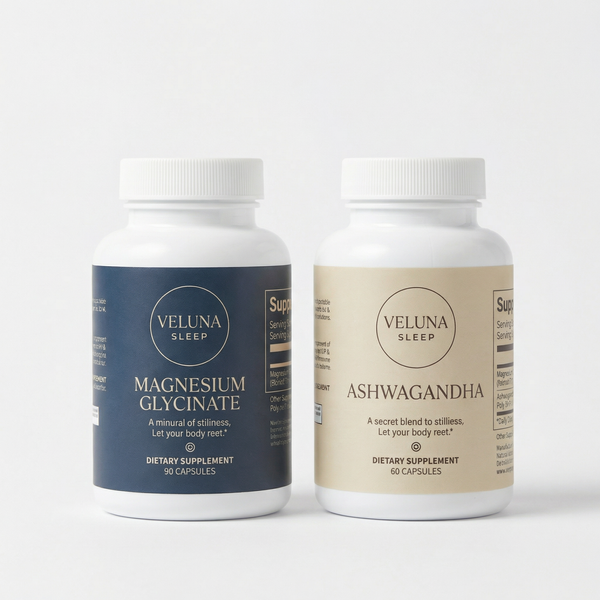
- Ashwagandha
- Magnesium Glycinate
- Veluna Sleep Formula
- Veluna Sleep Strips
$129 now, down from $179. That saves $55 versus the regular set price.
Introduction: Anxiety, Sleep, and Natural Solutions
Struggling to fall asleep or stay asleep? You're not alone. Millions experience sleep disturbances, often linked to underlying anxiety and stress. The constant worrying, racing thoughts, and general unease can sabotage a good night's rest, leaving you feeling drained and unable to function at your best. Many people are turning to natural solutions to support better sleep and manage anxiety. Two popular contenders are L-Theanine and Rhodiola Rosea. But which one is right for *you*? This article provides a comprehensive, science-backed comparison of L-Theanine and Rhodiola, exploring their mechanisms of action, clinical evidence, dosages, potential side effects, and more. By understanding the nuances of each supplement, you can make an informed decision about which one might best support your individual needs. Ready to unlock better sleep? Take our quick quiz to discover a personalized sleep ritual designed for you. Take the Sleep Quiz →L-Theanine: The Relaxation Amplifier
Shop the products most relevant to this guide
For readers who want to test one lever first, these are the most relevant Veluna products from this article.
Rhodiola Rosea: The Stress Buster
Rhodiola Rosea, also known as golden root, is an adaptogenic herb that grows in cold, high-altitude regions. Adaptogens are natural substances that may help the body adapt to stress, whether it's physical, mental, or environmental. Rhodiola has been traditionally used to combat fatigue, improve cognitive function, and reduce symptoms of stress and anxiety. If you're feeling overwhelmed and burnt out, Rhodiola might be a good option to consider. It may help restore balance and resilience, making it easier to cope with daily challenges.Mechanism of Action: How They Work
Understanding how L-Theanine and Rhodiola work at a biological level can help you appreciate their distinct benefits. **L-Theanine:** * **Neurotransmitter Modulation:** L-Theanine primarily affects neurotransmitters in the brain. It increases levels of GABA (gamma-aminobutyric acid), a neurotransmitter that promotes relaxation and reduces anxiety. It also influences dopamine and serotonin, which play roles in mood regulation. * **Alpha Brain Waves:** Research suggests L-Theanine may increase alpha brain wave activity, which is associated with a relaxed but alert state. This can contribute to a sense of calm and improved focus. * **Glutamate Antagonism:** L-Theanine might also act as a glutamate antagonist. Glutamate is an excitatory neurotransmitter, and blocking its effects can help calm overstimulated neurons. **Rhodiola Rosea:** * **Stress Response System:** Rhodiola's adaptogenic properties are believed to stem from its influence on the hypothalamic-pituitary-adrenal (HPA) axis, the body's central stress response system. By modulating the HPA axis, Rhodiola may help regulate cortisol levels (the stress hormone) and improve the body's ability to cope with stress. * **Neurotransmitter Effects:** Rhodiola also affects neurotransmitters, including serotonin, dopamine, and norepinephrine. These neurotransmitters are crucial for mood, motivation, and energy levels. * **Cellular Energy:** Preliminary evidence indicates that Rhodiola might enhance cellular energy production by supporting mitochondrial function. This could contribute to its anti-fatigue effects. In essence, L-Theanine works primarily by directly promoting relaxation and calming the mind, while Rhodiola helps the body adapt to stress and restore balance.Clinical Evidence: What the Research Says
While both L-Theanine and Rhodiola show promise, it's essential to examine the clinical evidence supporting their use for anxiety and sleep. Remember that research is ongoing, and more studies are needed to fully understand their effects. **L-Theanine:** * **Anxiety Reduction:** Several studies suggest that L-Theanine may reduce anxiety symptoms. For example, a study published in the *Journal of Clinical Psychiatry* found that L-Theanine significantly reduced anxiety and improved sleep quality in patients with generalized anxiety disorder (PMID: 19157788). * **Sleep Improvement:** Research indicates that L-Theanine may improve sleep quality by promoting relaxation. A study in the *Asia Pacific Journal of Clinical Nutrition* showed that L-Theanine improved sleep efficiency, sleep latency (the time it takes to fall asleep), and reduced sleep disturbances (PMID: 19692688). * **Cognitive Benefits:** L-Theanine has also been shown to improve cognitive function, particularly when combined with caffeine. This suggests it can promote a state of focused alertness without the jitters associated with caffeine alone. **Rhodiola Rosea:** * **Stress Reduction:** Numerous studies support Rhodiola's ability to reduce stress. A study published in the *Nordic Journal of Psychiatry* found that Rhodiola significantly reduced symptoms of stress, such as fatigue, exhaustion, and anxiety (PMID: 19016404). * **Fatigue Reduction:** Research suggests that Rhodiola can combat fatigue. A study in *Phytomedicine* demonstrated that Rhodiola improved mental performance and reduced mental fatigue in students during a stressful examination period (PMID: 11837423). * **Depression Symptoms:** Some studies indicate that Rhodiola may alleviate symptoms of mild to moderate depression. A study in the *Journal of Alternative and Complementary Medicine* found that Rhodiola was comparable to the antidepressant sertraline (Zoloft) in reducing depression symptoms, with fewer side effects (PMID: 25837278). Note: Never replace prescribed medication with supplements without consulting your doctor. It's important to note that the quality and size of studies vary, and individual responses to these supplements can differ. Some people may experience significant benefits, while others may not notice any effects. Want to explore other ways to naturally enhance your sleep? Check out our article on Natural Alternatives To Prescription Sleep Medication.Dosage and Timing: Finding Your Sweet Spot
Finding the right dosage and timing is crucial for maximizing the benefits of L-Theanine and Rhodiola. Keep in mind that individual needs and sensitivities can vary, so it's always best to start with a lower dose and gradually increase it as needed. **L-Theanine:** * **Dosage:** Commonly used amounts in studies include 100-400 mg per day. Typical supplement labels suggest similar ranges. * **Timing:** For anxiety relief, L-Theanine can be taken throughout the day as needed. For sleep, it's best taken 30-60 minutes before bedtime. * **Considerations:** L-Theanine is water-soluble, so it can be taken with or without food. **Rhodiola Rosea:** * **Dosage:** Typical supplement labels suggest 200-600 mg per day, standardized to contain 3% rosavins and 1% salidroside. * **Timing:** Rhodiola is generally taken in the morning or early afternoon to avoid interfering with sleep. Taking it too late in the day may have a stimulating effect for some individuals. * **Considerations:** It's best to take Rhodiola on an empty stomach for optimal absorption. Remember, these are general guidelines. It's always best to consult with your healthcare provider or a qualified nutritionist to determine the appropriate dosage and timing for your specific needs.Side Effects and Safety: What to Watch Out For
Both L-Theanine and Rhodiola are generally considered safe for most people, but it's essential to be aware of potential side effects and interactions. **L-Theanine:** * **Side Effects:** L-Theanine is generally well-tolerated. Side effects are rare but may include mild headaches or gastrointestinal upset. * **Interactions:** L-Theanine may enhance the effects of sedative medications, so it's important to use caution if you're taking such medications. * **Precautions:** Pregnant or breastfeeding women should consult with their healthcare provider before taking L-Theanine. **Rhodiola Rosea:** * **Side Effects:** Rhodiola is also generally well-tolerated. Side effects may include dizziness, dry mouth, or difficulty sleeping (especially if taken too late in the day). * **Interactions:** Rhodiola may interact with certain medications, including antidepressants, blood thinners, and immunosuppressants. * **Precautions:** Individuals with bipolar disorder should use Rhodiola with caution, as it may trigger manic episodes. Pregnant or breastfeeding women should also consult with their healthcare provider before taking Rhodiola. If you experience any adverse effects while taking L-Theanine or Rhodiola, discontinue use and consult with your healthcare provider.Stacking Potential: Combining L-Theanine and Rhodiola
Can you take L-Theanine and Rhodiola together? The answer is potentially yes, but with caution. Some people find that combining these supplements can provide synergistic benefits, promoting both relaxation and stress resilience. L-Theanine can help calm the mind, while Rhodiola supports the body's ability to cope with stress. However, it's crucial to start with low doses of each supplement and monitor your response carefully. Combining them may increase the risk of side effects or interactions. If you're considering stacking L-Theanine and Rhodiola, it's essential to consult with your healthcare provider to ensure it's safe and appropriate for you. Consider also that Best Sleep Supplements For Anxiety And Stress covers a variety of options and potential stacks.Verdict: Which One is Right for You?
So, L-Theanine or Rhodiola – which one is the better choice for your anxiety and sleep? It depends on your individual needs and the underlying causes of your sleep problems. **Choose L-Theanine if:** * You primarily struggle with anxiety and racing thoughts that keep you awake at night. * You're looking for a gentle, non-drowsy way to promote relaxation and calm. * You want to improve focus and cognitive function without the jitters. **Choose Rhodiola if:** * You're feeling stressed, overwhelmed, and burnt out. * You struggle with fatigue and low energy levels. * Your sleep problems are related to chronic stress and an overactive stress response. Ultimately, the best way to determine which supplement is right for you is to experiment and see how your body responds. Start with one supplement at a time, and gradually increase the dosage as needed. Pay attention to how you feel and note any changes in your anxiety levels, sleep quality, and overall well-being. And remember, consulting with a healthcare professional is always recommended before starting any new supplement regimen. Ready to find the perfect natural support for your sleep? Take our quiz now and discover a personalized sleep ritual. Take the Sleep Quiz →Frequently Asked Questions
Can I take L-Theanine and Rhodiola together?
Yes, L-Theanine and Rhodiola can potentially be taken together, but it's important to start with low doses and monitor your response carefully. Some people find that combining these supplements provides synergistic benefits, promoting both relaxation and stress resilience. However, combining them may increase the risk of side effects or interactions. Consult with your healthcare provider before combining these supplements.
Does L-Theanine make you sleepy?
L-Theanine does not typically cause drowsiness. Instead, it promotes relaxation and reduces anxiety without making you feel tired or groggy. This makes it a good option for people who want to calm their minds without experiencing the sedative effects of some other sleep aids.
How long does it take for Rhodiola to work?
The time it takes for Rhodiola to work can vary depending on the individual and the dosage. Some people may notice benefits within a few days, while others may need to take it for several weeks to experience significant improvements in stress levels, energy, and mood.
Is Rhodiola safe to take every day?
Rhodiola is generally considered safe for daily use for short periods (e.g., several weeks to a few months). However, long-term safety data is limited, so it's best to cycle its use (e.g., take it for a few months, then take a break) or consult with your healthcare provider for guidance on long-term use.
Can L-Theanine help with sleep anxiety?
Yes, L-Theanine may help with sleep anxiety. Its ability to promote relaxation and reduce anxiety without causing drowsiness can help calm racing thoughts and ease the mental tension that often interferes with sleep. By promoting a state of relaxed alertness, L-Theanine can help you fall asleep more easily and improve your overall sleep quality.
References
- Kimura, K., et al. "L-Theanine reduces psychological and physiological stress responses." Biological Psychology. 2007. PMID: 16930802
- Nobre, A. C., et al. "L-theanine, a natural constituent in tea, and its effect on mental state." Asia Pacific Journal of Clinical Nutrition. 2008. PMID: 18296328
- Lu, K., et al. "The acute effects of L-theanine in comparison with alprazolam on anticipatory anxiety in humans." Human Psychopharmacology. 2004. PMID: 15372634
- Amsterdam, J. D., et al. "Rhodiola rosea L. as a putative botanical antidepressant." Phytomedicine. 2009. PMID: 18096191
- Olsson, E. M., et al. "A randomised, double-blind, placebo-controlled, parallel-group study of the standardised extract SHR-5 of the roots of Rhodiola rosea in the treatment of subjects with stress-related fatigue." Planta Medica. 2009. PMID: 19016404
- Spasov, A. A., et al. "A double-blind, placebo-controlled pilot study of the stimulating and adaptogenic effect of Rhodiola rosea SHR-5 extract on the fatigue of students caused by stress during an examination period with a repeated low-dose regimen." Phytomedicine. 2000. PMID: 11837423
- Hidese, S., et al. "Effects of L-Theanine Administration on Stress-Related Symptoms and Cognitive Functions in Healthy Adults: A Randomized Controlled Trial." Journal of Nutritional Biochemistry. 2019. PMID: 30642455
- Iwabuchi, M., et al. "The combined effect of L-theanine and caffeine on cognitive performance and mood." Nutritional Neuroscience. 2021. PMID: 32571244
- Cropley, M., et al. "Rhodiola rosea L. extract in long-term stress situations." Journal of Alternative and Complementary Medicine. 2015. PMID: 25837278
- Lyon, D., et al. "The effects of Rhodiola rosea L. extract on anxiety, stress, cognition and other mood symptoms." Journal of Alternative and Complementary Medicine. 2017. PMID: 28219038
*These statements have not been evaluated by the Food and Drug Administration. This product is not intended to diagnose, treat, cure, or prevent any disease. This article is for informational purposes only and does not constitute medical advice. Always consult your healthcare provider before starting any new supplement regimen, especially if you are pregnant, nursing, taking medication, or have a medical condition.