Navigating the complexities of anxiety and its impact on sleep can be a daunting journey. For many, the immediate thought turns to prescription medications, known for their potency in managing acute anxiety symptoms. However, a growing body of evidence is highlighting the potential of natural compounds, such as L-theanine, as a gentler, yet effective, approach to fostering calm and improving sleep quality without the significant drawbacks often associated with pharmaceutical interventions.
This article provides an in-depth comparison of L-theanine and prescription anxiety medications, focusing on their mechanisms of action, efficacy, safety profiles, and suitability for individuals seeking relief from anxiety-induced sleep disturbances. By examining the scientific literature and clinical considerations, we aim to offer a clear, evidence-based perspective to guide informed decision-making for better sleep and overall well-being.
Understanding Anxiety and Sleep Disturbances
Anxiety is a pervasive mental health condition characterized by persistent worry, nervousness, and apprehension. This heightened state of arousal can significantly interfere with the body's natural sleep-wake cycle. When the mind is racing, anticipating threats, or ruminating on stressors, the physiological state required for sleep—relaxation, reduced heart rate, and a quieting of mental activity—becomes difficult to achieve.
This disruption can manifest as insomnia, characterized by difficulty falling asleep, staying asleep, or experiencing non-restorative sleep. The chronic lack of quality sleep, in turn, can exacerbate anxiety symptoms, creating a vicious cycle that negatively impacts mood, cognitive function, and physical health. Understanding the interplay between anxiety and sleep is crucial for identifying effective management strategies.
What is L-Theanine?
L-theanine is a unique amino acid predominantly found in tea leaves, particularly in green tea. It is celebrated for its ability to promote relaxation and a sense of calm without inducing drowsiness or sedation. Unlike many anxiolytic agents, L-theanine's mechanism of action is nuanced, focusing on modulating neurotransmitter activity in the brain to foster a state of relaxed alertness.
Research indicates that L-theanine can increase alpha brain wave activity, a characteristic of a calm yet attentive state, thereby reducing mental clutter and enhancing focus. It also influences levels of key neurotransmitters such as gamma-aminobutyric acid (GABA), serotonin, and dopamine, all of which play critical roles in mood regulation and stress response. A 2019 study published in the *Journal of the American College of Nutrition* noted its potential to improve sleep quality and reduce anxiety symptoms.
Mechanisms of Action: L-Theanine vs. Prescription Medications
L-theanine exerts its calming effects through several biochemical pathways. It is known to cross the blood-brain barrier, where it can interact with neurotransmitter systems. Specifically, L-theanine has been shown to increase the synthesis of GABA, an inhibitory neurotransmitter that helps to calm nerve activity. It also modulates serotonin and dopamine levels, neurotransmitters involved in mood, pleasure, and stress resilience. This multifaceted action contributes to its anxiolytic and sleep-promoting properties.
Prescription anxiety medications, primarily benzodiazepines (like Xanax and Klonopin) and selective serotonin reuptake inhibitors (SSRIs), operate differently. Benzodiazepines enhance the effects of GABA by binding to GABA-A receptors, leading to a rapid and potent calming effect. SSRIs, on the other hand, work by increasing the availability of serotonin in the brain, which can help regulate mood and reduce anxiety over time. While effective, these mechanisms often come with significant side effect profiles and risks of dependence.
Efficacy of L-Theanine for Anxiety and Sleep
The efficacy of L-theanine for mild to moderate anxiety and sleep disturbances is supported by a growing body of scientific literature. Studies have demonstrated its ability to reduce subjective feelings of stress and anxiety, improve cognitive performance under stressful conditions, and enhance sleep quality. For instance, a 2017 trial in *Nutrients* found that daily supplementation with L-theanine improved sleep quality, reduced fatigue, and improved cognitive function in a group of adults.
While L-theanine may not produce the immediate, profound sedation associated with benzodiazepines, its gradual and sustained calming effect makes it a valuable tool for individuals whose sleep is disrupted by persistent worry or mild anxiety. The question of how quickly L-theanine helps anxiety can vary, but many users report feeling a sense of calm within 30-60 minutes of ingestion. For some, this translates to an easier transition to sleep. The consensus from many anecdotal reports, often found on platforms like L-theanine for anxiety reddit discussions, suggests that consistent use can lead to significant improvements in managing daily anxiety and promoting restful sleep.
Efficacy of Prescription Anxiety Medications
Prescription anxiety medications, particularly benzodiazepines, are highly effective for the acute management of severe anxiety and panic attacks. They offer rapid symptom relief, making them invaluable in crisis situations or for short-term use. For individuals with severe anxiety disorders, such as generalized anxiety disorder or panic disorder, these medications can significantly improve quality of life by reducing the intensity and frequency of distressing symptoms.
However, their efficacy is often accompanied by substantial risks. Benzodiazepines carry a high potential for dependence, tolerance, and withdrawal syndromes upon discontinuation. Long-term use can lead to cognitive impairments, sedation, and a blunting of emotional responses. SSRIs, while generally considered safer for long-term use, can take several weeks to become fully effective and may also have side effects, including sexual dysfunction, weight changes, and initial increases in anxiety for some individuals.
Safety Profile and Side Effects: L-Theanine vs. Prescription Medications
L-theanine is generally considered safe and well-tolerated, with a low incidence of side effects. Typical dosages used in studies range from 200 mg to 400 mg per day. Mild side effects, if they occur, might include headaches or gastrointestinal upset. Crucially, L-theanine does not typically cause drowsiness, dizziness, or the cognitive impairment associated with many prescription sedatives, making it a favorable option for daytime use and for individuals who need to maintain alertness.
Prescription anxiety medications, conversely, have a more complex safety profile. Benzodiazepines can cause significant side effects such as drowsiness, impaired coordination, memory problems, and respiratory depression, especially when combined with other central nervous system depressants like alcohol. The risk of dependence and withdrawal is a major concern, with symptoms ranging from anxiety and insomnia to seizures in severe cases. SSRIs can also cause side effects like nausea, insomnia, sexual dysfunction, and a potential for increased suicidal ideation in young adults, as highlighted by warnings from regulatory bodies like the FDA.
Interactions and Contraindications
When considering any supplement or medication, understanding potential interactions is paramount. L-theanine is generally considered to have a low risk of significant drug interactions. However, individuals taking medications that affect neurotransmitter levels or have sedative properties should consult with a healthcare professional. While there is no widespread contraindication for taking L-theanine with GLP-1 medications, individuals managing diabetes or other conditions with GLP-1 agonists should always discuss any new supplement with their prescribing physician to ensure no unforeseen interactions or impacts on their treatment goals.
Prescription anxiety medications, particularly benzodiazepines, have a more extensive list of potential interactions. They can interact dangerously with alcohol, opioids, and other central nervous system depressants, leading to profound sedation and potentially life-threatening respiratory depression. Individuals with certain medical conditions, such as severe respiratory disease, liver or kidney impairment, or a history of substance abuse, may have contraindications for these medications. The question of whether people with schizophrenia can take L-theanine is an area of ongoing research; some studies suggest it may have adjunctive benefits for certain symptoms, but it is crucial that any such use is supervised by a psychiatrist, as it is not a primary treatment for psychosis and could potentially interact with antipsychotic medications.
L-Theanine vs. Xanax: A Direct Comparison
The direct comparison between L-theanine and Xanax (alprazolam) reveals fundamental differences in their nature, potency, and risk profiles. Xanax is a potent benzodiazepine prescribed for acute anxiety and panic disorders. It acts rapidly to produce significant sedation and anxiety relief by enhancing GABAergic inhibition.
L-theanine, an amino acid found in tea, offers a gentler, more nuanced approach. It promotes relaxation and calm by modulating neurotransmitters, without the intense sedation or dependence potential of Xanax. While L-theanine may not be as effective for severe panic attacks, it is often preferred for managing chronic, mild-to-moderate anxiety and improving sleep quality due to its favorable safety profile. The answer to "Is L-theanine as good as Xanax?" depends heavily on the severity of the anxiety and the desired outcome; for mild anxiety and sleep support, L-theanine is a viable and safer alternative, whereas for acute, severe panic, Xanax may be medically indicated under strict supervision.
Research Highlights and Clinical Perspectives
The scientific community continues to explore the therapeutic potential of L-theanine. A 2020 review in *Brain Sciences* highlighted L-theanine's neuroprotective and psychotropic effects, suggesting its role in managing various neurological and psychiatric conditions. Studies have also investigated its impact on mood disorders. For example, research published in *Psychopharmacology* in 2011 found that L-theanine supplementation reduced psychological and physiological stress responses. This suggests L-theanine for depression and anxiety can be a complementary approach, though it is not a substitute for professional medical treatment for these conditions.
Clinically, L-theanine is often recommended as a natural adjunct for stress management and sleep hygiene. While prescription medications remain the cornerstone for severe anxiety disorders, healthcare providers are increasingly acknowledging the role of lifestyle interventions and natural supplements like L-theanine for individuals seeking less pharmacologically dependent solutions. The lack of significant side effects and dependence potential makes L-theanine an attractive option for long-term use. It's important to note that while some individuals report L-theanine cured their anxiety, this is highly individual and should not replace a comprehensive treatment plan for diagnosed anxiety disorders.
Frequently Asked Questions
Can I take L-theanine with GLP-1?
While there are no widely reported direct contraindications for taking L-theanine with GLP-1 medications, it is essential to consult with your healthcare provider. They can assess your individual health status, current medications, and ensure that combining L-theanine with your GLP-1 treatment will not interfere with its efficacy or cause any adverse effects.
What does Taylor Swift take for anxiety?
Information regarding the specific medications or supplements any celebrity, including Taylor Swift, uses for anxiety is generally private health information and not publicly disclosed. Public figures' health choices are often speculative, and it is best to rely on evidence-based medical advice rather than anecdotal information or celebrity endorsements for managing anxiety.
Is L-theanine as good as Xanax?
L-theanine and Xanax (alprazolam) have different mechanisms of action and potency. Xanax is a powerful benzodiazepine for acute, severe anxiety and panic attacks, offering rapid sedation. L-theanine is an amino acid that promotes relaxation and calm without significant sedation or dependence risk, making it suitable for mild to moderate anxiety and sleep support. For severe anxiety, Xanax may be more effective but carries significant risks, whereas L-theanine is a safer, gentler option for less acute needs.
Can people with schizophrenia take L-theanine?
Research into L-theanine's use in schizophrenia is ongoing. Some studies suggest it may have adjunctive benefits for certain symptoms, potentially improving cognitive function or reducing anxiety. However, it is not a primary treatment for schizophrenia, and any use must be strictly supervised by a psychiatrist. Individuals with schizophrenia should discuss L-theanine with their doctor to ensure it is safe and appropriate, especially concerning potential interactions with antipsychotic medications.
How quickly does L-theanine help anxiety?
The onset of L-theanine's effects can vary among individuals. Many people report experiencing a sense of calm and relaxation within 30 to 60 minutes of taking a typical dose (e.g., 200 mg). This can help facilitate the transition to sleep for those whose anxiety interferes with their ability to fall asleep. However, for some, the effects may be more subtle or take longer to become noticeable.
Can L-theanine cause anxiety?
Generally, L-theanine is not known to cause anxiety. In fact, its primary benefit is to reduce anxiety and promote relaxation. However, as with any supplement, individual reactions can occur. If you experience increased anxiety after taking L-theanine, it is advisable to discontinue use and consult with a healthcare professional.
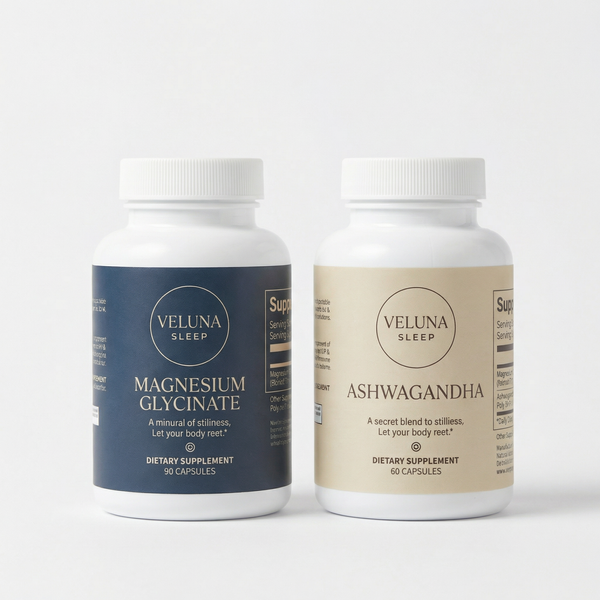
For those seeking to enhance their sleep quality and manage anxiety-related sleep disturbances, exploring natural avenues is a valuable consideration. Discover our Veluna Sleep Formula, designed with synergistic ingredients to promote relaxation and restful sleep. Additionally, consider the benefits of Magnesium Glycinate, known for its calming properties and role in sleep regulation. For a comprehensive approach to improving your sleep, explore our extensive resources on establishing healthy sleep habits in our sleep hygiene hub.
Recommended Veluna products for this topic:
- Mind Calm Starter Set — calming routine for an anxious mind.