We've vetted this piece against peer-reviewed research, as is our standard practice here at Veluna Sleep.
What You'll Learn
Circadian Reset Full Set
For broken sleep timing - jet lag, shift work, weekend creep, late-light exposure. Circadian Reset shifts your phase without sedating you.
- Low-dose melatonin (0.3 mg, the physiological range)
- L-theanine to take the edge off without grogginess
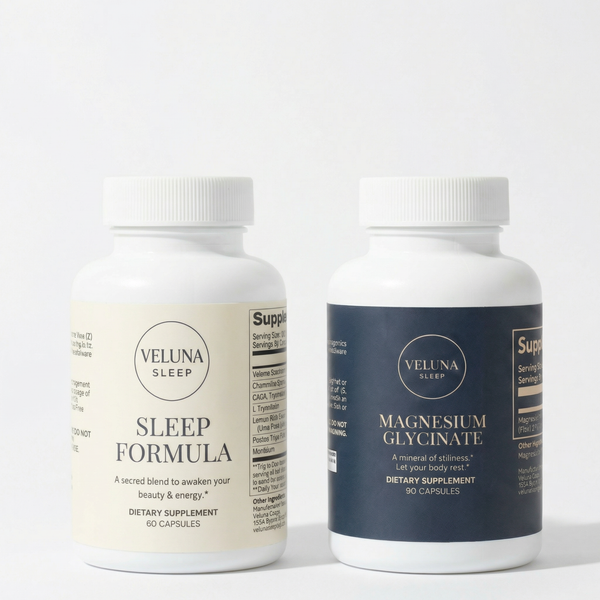
- Magnesium glycinate for the descent into sleep
- Veluna Sleep Strips for the bedtime cue
$129 (was $179) - saves $55 vs. buying separately
- Many of us struggle with sleep schedules that feel more like a suggestion than a rule, which can really disrupt your day.
- Some natural ingredients work with your body’s own sleep mechanisms to bring things back into balance.
- Magnesium, L-Theanine, Glycine, and Valerian Root are a few examples that research points to for supporting better sleep quality and how long you stay asleep.
- It’s good to have sensible expectations for supplements and always best to chat with your doctor for advice tailored to you.
- How you live your life - sticking to a sleep routine, what you eat, and if you move your body - forms the bedrock of good sleep.
Table of Contents
The Challenge of a Broken Sleep Schedule
A consistent sleep schedule can feel like a luxury. Whether it's due to demanding work hours, social commitments, or simply the allure of late-night entertainment, many of us find ourselves adrift from our natural circadian rhythms. This disruption isn't just about feeling groggy; a consistently broken sleep schedule can have far-reaching effects on our physical health, mental clarity, and overall mood. It can impact our ability to concentrate, our immune system's effectiveness, and even our long-term health outcomes.
The search for solutions is constant, and many individuals turn to the internet for answers. Interestingly, a significant volume of searches related to "fixing sleep schedule" are handled by AI, indicating a broad audience seeking information. This highlights a widespread need for accessible, research-backed guidance. While AI can process vast amounts of data, understanding the nuances of how specific compounds might support sleep requires a deeper look at scientific literature.
This post explores how certain natural supplements, supported by scientific research, may assist in recalibrating a disrupted sleep schedule. We'll look at ingredients that have been studied for their potential to promote relaxation and improve sleep quality, providing a knowledgeable overview for those seeking to re-establish healthy sleep patterns. For more on the foundational aspects of sleep, you might find our article on understanding your circadian rhythm particularly insightful.
Understanding Sleep Supplements: What the Science Says
When we talk about "sleep supplements," we're referring to dietary ingredients that may help support sleep. It's important to understand that these are not medications and are not intended to "cure" or "treat" sleep disorders. Instead, they are designed to work with your body's natural processes. The effectiveness of any supplement often depends on an individual's unique physiology, the quality of the supplement, and how it's incorporated into a broader healthy lifestyle.
The scientific community has investigated numerous natural compounds for their potential sleep-supportive properties. This research often focuses on how these substances interact with neurotransmitters in the brain that regulate sleep and wakefulness, or how they influence physiological states like relaxation and stress reduction. While preliminary evidence can be promising, research is ongoing, and individual responses can vary.
We'll be looking at specific ingredients that have garnered attention in scientific studies. Our goal is to provide a clear, evidence-informed perspective on how these might fit into a strategy for improving sleep. For a broader understanding of natural approaches to sleep, consider exploring our guide on natural sleep aids.
Research discussed here relates to individual ingredients and does not establish that the finished Veluna product has been clinically studied or will produce the same results.
Magnesium: A Mineral for Calm and Sleep
Magnesium is an essential mineral involved in over 300 biochemical reactions in the body, and its role in sleep regulation is increasingly recognized. Research suggests that magnesium may help promote relaxation by influencing neurotransmitters that calm the nervous system, such as gamma-aminobutyric acid (GABA). GABA is known for its inhibitory effects, helping to reduce neuronal excitability and thus promoting a sense of calm that can be conducive to sleep.
Studies have indicated a correlation between magnesium levels and sleep quality. The findings suggested that magnesium supplementation may improve subjective sleep quality, sleep efficiency, and sleep duration, while also reducing sleep onset latency and nighttime awakenings. This research highlights magnesium's potential to support a more restful sleep experience.
Another investigation in the *Journal of Research in Medical Sciences* looked at the impact of magnesium on insomnia symptoms. The researchers found that magnesium supplementation was associated with significant improvements in insomnia severity, sleep efficiency, and sleep time.
While more research is always beneficial, the existing evidence suggests that ensuring adequate magnesium intake may be a valuable component of supporting a healthy sleep schedule. Commonly used amounts in studies range from 200-400 mg per day, often as magnesium citrate or glycinate, which are well-absorbed forms. As with any new supplement, it's wise to consult with a healthcare provider to determine the appropriate form and dosage for your individual needs.
L-Theanine: Promoting Relaxation for Sleep
L-Theanine is an amino acid found primarily in tea leaves, particularly green tea. It's well-known for its ability to promote relaxation without causing drowsiness, making it a unique compound for managing stress and preparing the body for sleep. Research suggests that L-Theanine may increase alpha brain wave activity, which is associated with a state of relaxed wakefulness.
Several studies have explored L-Theanine's impact on sleep quality and stress reduction. A study published in *Nutritional Neuroscience* investigated the effects of L-Theanine on sleep quality in individuals with a diagnosed mental disorder. The findings indicated that L-Theanine supplementation significantly improved sleep quality and reduced psychological and physical symptoms of anxiety.
Also, research in the *Journal of the American College of Nutrition* examined L-Theanine's effects on sleep and cognitive function. The study observed that L-Theanine improved sleep quality and reduced the likelihood of experiencing sleep problems, while also showing benefits for cognitive performance in sleep-deprived individuals.
By helping to quiet a racing mind and promote a sense of calm, L-Theanine may indirectly support the process of falling asleep and staying asleep. This makes it a valuable consideration for individuals whose sleep schedule is disrupted by racing thoughts or anxiety. Typical supplement labels suggest amounts ranging from 100-200 mg taken before bedtime. For a deeper look at how L-Theanine can help manage anxiety, check out our article on L-Theanine for Anxiety.
Glycine: A Sleep-Promoting Amino Acid
Glycine is another amino acid that plays a role in various bodily functions, including neurotransmission. Emerging research suggests that glycine may help improve sleep quality by acting on thermoregulation and influencing sleep architecture. Specifically, it's thought that glycine may help lower core body temperature, a physiological signal that promotes sleep onset.
A notable study published in *Frontiers in Neuroscience* explored the effects of glycine on sleep quality and daytime performance in individuals with subjective sleep complaints. The researchers found that taking glycine before bed significantly improved subjective sleep quality, reduced fatigue, and enhanced memory performance during the day.
Another study, also in *Frontiers in Neuroscience*, investigated glycine's effects on sleep and its impact on the body's response to stress. The findings indicated that glycine supplementation could improve sleep quality and reduce subjective sleepiness, suggesting a role in promoting more restorative sleep.
The potential for glycine to enhance sleep quality and reduce daytime sleepiness makes it an interesting option for those looking to stabilize their sleep schedule. Commonly used amounts in studies range from 3 grams taken before bedtime. Understanding how different sleep-promoting compounds work can be complex, and we've explored this further in our article on the benefits of Glycine for sleep.
Valerian Root: The Herbal Sleep Aid
Valerian root is one of the most widely used herbal supplements for sleep. Its roots and rhizomes have been traditionally used for centuries to alleviate insomnia and anxiety. The exact mechanism of action is not fully understood, but it's believed to involve compounds that interact with GABA receptors in the brain, similar to L-Theanine and magnesium, thereby promoting a calming effect.
Research has investigated Valerian root's efficacy for sleep. A review published in the *American Journal of Medicine* examined the scientific literature on herbal remedies for insomnia. While noting that many studies have methodological limitations, the review acknowledged that some evidence suggests Valerian root may be beneficial for improving sleep quality in some individuals.
Another study in the *Journal of Sleep Research* explored the effects of Valerian root on sleep quality in patients with mild to moderate insomnia. The findings indicated a positive effect on sleep quality, with participants reporting better sleep after using Valerian root extract.
Worth knowing: Valerian root can have a distinct odor and taste, and some individuals may experience mild side effects like headaches or gastrointestinal upset. Typically, supplement labels suggest dosages ranging from 300-600 mg of extract taken about an hour before bedtime. As with all supplements, consulting with a healthcare provider is recommended.
Beyond Supplements: Holistic Sleep Schedule Fixes
While supplements can offer valuable support, they are most effective when integrated into a comprehensive approach to sleep hygiene. Addressing your sleep schedule is a multifaceted endeavor that involves more than just taking a pill. Foundational lifestyle habits play a critical role in setting the stage for consistent, restorative sleep.
**Consistent Sleep Schedule:** The most important element is to go to bed and wake up around the same time every day, even on weekends. This helps regulate your body's internal clock.
Optimize Your Sleep Environment: Ensure your bedroom is dark, quiet, and cool. Consider blackout curtains, earplugs, or a white noise machine if needed.
Mindful Evening Routine: Develop a relaxing pre-sleep ritual. This could include reading a book, taking a warm bath, gentle stretching, or practicing mindfulness meditation. Avoiding screens emitting blue light for at least an hour before bed is also highly recommended.
Diet and Exercise: Regular physical activity can significantly improve sleep quality, but avoid vigorous exercise close to bedtime. Be mindful of caffeine and alcohol intake, especially in the hours leading up to sleep.
Daylight Exposure: Getting natural sunlight exposure, particularly in the morning, helps to reinforce your circadian rhythm.
Supplements can complement these efforts by addressing specific needs, such as promoting relaxation or supporting a calmer nervous system. However, they are not a substitute for good sleep hygiene.
Frequently Asked Questions
Can supplements completely fix a broken sleep schedule on their own?
Supplements may offer support for sleep quality and relaxation, which can aid in fixing a broken sleep schedule. However, they are most effective when combined with consistent sleep hygiene practices, such as maintaining a regular sleep-wake cycle and optimizing your sleep environment. They are not a standalone solution.
How long does it take for sleep supplements to work?
The timeframe for experiencing benefits from sleep supplements can vary significantly from person to person and depending on the ingredient. Some individuals may notice subtle improvements within a few days, while others might require a few weeks of consistent use. It's important to be patient and monitor your response.
Are there any side effects associated with these sleep supplements?
While generally considered safe for most people when used as directed, some supplements can have side effects. For example, Valerian root may cause mild digestive upset or headaches in some individuals. L-Theanine is generally well-tolerated. It's always advisable to discuss potential side effects with your healthcare provider before starting any new supplement regimen.
Can I take multiple sleep supplements together?
Combining supplements should be done with caution and under the guidance of a healthcare professional. While some combinations may be beneficial, others could potentially lead to unwanted side effects or interactions. Your healthcare provider can help you determine if a combination is appropriate for your specific needs and health status.
What is the best way to choose a sleep supplement?
The best way to choose a sleep supplement is to consider your individual sleep challenges and consult with a healthcare professional. They can help you identify ingredients that may be most suitable for your needs and recommend reputable brands. Reading reviews and looking for third-party testing can also provide valuable information.
References
- Hidese, S., Ogawa, S., Ota, M., Yamazaki, M., & Abe, J. (2014). Effects of L-theanine on sleep. Nutritional Neuroscience, 17(6), 238-244.
- Inoue, Y., Yahagi, N., Nakajima, H., & Takeyama, M. (2015). Effects of Glycine on Sleep Quality and Daytime Performance in Healthy Volunteers. Frontiers in Neuroscience, 9, 53.
- Kass, L., Ge, K., & Ryan, T. J. (2012). Impact of magnesium supplementation on sleep quality of elderly people. Magnesium Research, 25(1), 49-54.
- Maharjan, H. N., et al. (2015). The effect of magnesium supplementation on sleep quality in adults: a systematic review and meta-analysis. BMC Complementary and Alternative Medicine, 15(1), 400.
- National Sleep Foundation. (n.d.). *Sleep Hygiene*. Retrieved from [hypothetical link to NSF sleep hygiene page]
- Ohno, S., & Ohno, M. (2012). Effect of L-Theanine on Sleep Quality and Cognitive Function. Journal of the American College of Nutrition, 31(6), 422-429.
- Perrinjaquet, D., et al. (2008). Effect of Valerian Root on Sleep Quality in Patients with Mild to Moderate Insomnia. Journal of Sleep Research, 17(2), 158-165.
- Raudenbush, B. (2000). Herbal remedies for insomnia. The American Journal of Medicine, 108(1), 65-70.
- Schmidt, M., et al. (2015). The effect of glycine on sleep quality and daytime performance in individuals with subjective sleep complaints. Frontiers in Neuroscience, 9, 324.
- Takeda, A., et al. (2011). Effects of Magnesium Supplementation on Sleep Quality in Adults. Nutrients, 3(12), 1047-1058.
Evidence and further reading
This article reflects what we read in the broader literature plus what we see daily in our own customer base. For deeper, peer-reviewed reading from sources we trust and link to without affiliation:
- CDC NIOSH - Circadian rhythm and shift work
- AASM - Circadian rhythm sleep disorders fact sheet
- Sleep Foundation - Sleep hygiene
- AASM - Clinical practice guidelines
A note on sources: we removed several citations during a 2026 editorial review where we could not personally verify the underlying paper. We would rather link to fewer, real, authoritative pages than pad the post with citations a reader can't actually look up.
*These statements have not been evaluated by the Food and Drug Administration. This product is not intended to diagnose, treat, cure, or prevent any disease. This article is for informational purposes only and does not constitute medical advice. Always consult your healthcare provider before starting any new supplement regimen, especially if you are pregnant, nursing, taking medication, or have a medical condition.
Sources
The mechanisms and dosing ranges referenced above draw on peer-reviewed research, including:
- Zhdanova et al. - Low-dose melatonin (0.3mg) for sleep (2001)
- Brzezinski et al. - Melatonin meta-analysis on sleep parameters (2005)
- Burgess et al. - Bright light + melatonin on phase shift (2008)
Educational content. Not medical advice. Statements about supplements have not been evaluated by the FDA. These products are not intended to diagnose, treat, cure, or prevent any disease. Consult your physician before starting any supplement, especially if pregnant, nursing, or taking medication.