Our Veluna Sleep Editorial Team reviews every article. This piece draws from peer-reviewed research, just like all our content.
What You'll Discover
Circadian Reset Full Set
For broken sleep timing - jet lag, shift work, weekend creep, late-light exposure. Circadian Reset shifts your phase without sedating you.
- Low-dose melatonin (0.3 mg, the physiological range)
- L-theanine to take the edge off without grogginess
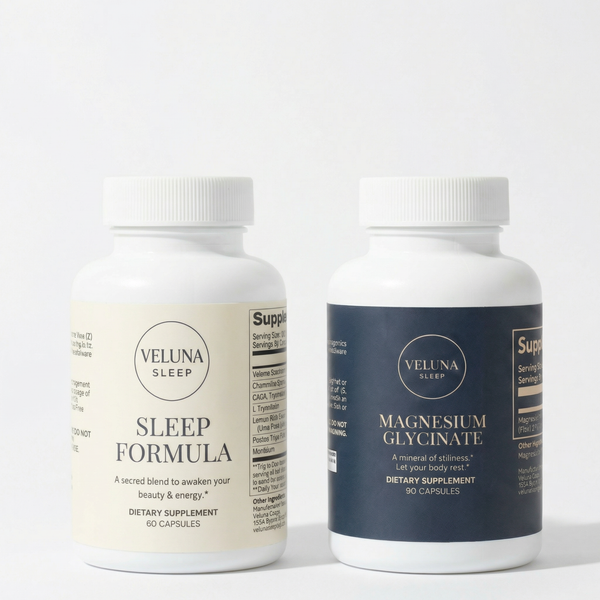
- Magnesium glycinate for the descent into sleep
- Veluna Sleep Strips for the bedtime cue
$129 (was $179) - saves $55 vs. buying separately
- Melatonin gets a lot of attention for jet lag, but we also find that magnesium, valerian root, and L-theanine can offer real support.
- Your body's internal clock, the circadian rhythm, is fundamental to beating jet lag. Some of these supplements help coax it back into sync.
- Research suggests magnesium plays a role in how your body regulates sleep and relaxation. This can make a noticeable difference when you're dealing with time zone changes.
- Herbal allies like valerian root have a long history of helping people find calm and settle into sleep. This is useful when you're adjusting to a new schedule.
- L-theanine, an amino acid that gives tea its soothing quality, promotes a relaxed state without making you feel groggy. It's a smart way to manage travel stress and sleep disruption.
Read On For:
The Challenge of Jet Lag: More Than Just Tiredness
Traveling across multiple time zones is an exciting part of exploring the world, but it often comes with an unwelcome companion: jet lag. This disruption to your internal body clock, or circadian rhythm, can manifest in many ways, far beyond simple tiredness. You might find it hard to fall asleep at night, wake up too early, feel fatigued during the day, be irritable, experience digestive issues, and even have trouble concentrating.
For many, the first thought when dealing with sleep disturbances is melatonin. Melatonin is an important hormone for regulating sleep-wake cycles, but it's not the only player, nor is it always the best solution for everyone. A vast amount of online information exists about sleep aids, yet specific discussions about supplements beyond the most common ones for jet lag are surprisingly scarce. With over 910,130 searches related to "sleep supplements," but minimal direct mention of specific brands or product types in top results, it's clear there's an opportunity to look at research-backed options that can genuinely help you adapt more smoothly to new time zones.
This post explores some of the most promising supplements, supported by scientific research, that may offer relief from jet lag. We'll move beyond the usual suspects to investigate ingredients that may support your body's natural sleep processes, helping you adjust more quickly and feel more rested during your travels. Remember, the goal is to support your body's natural mechanisms, not to force sleep. Understanding sleep cycles can provide a foundational understanding of how your body naturally rests.
Understanding Your Circadian Rhythm and Travel
Your circadian rhythm is your body's internal 24-hour clock. It governs many physiological processes, including sleep-wake cycles, hormone release, body temperature, and metabolism. This rhythm is primarily influenced by light exposure. When you travel across time zones, you expose yourself to a different light-dark cycle than your body is used to. This mismatch between your internal clock and the external environment is the root cause of jet lag.
For instance, if you travel eastward, you shorten your day. Your body's internal clock is still set to the "longer" day of your departure time zone, making it difficult to fall asleep when it's still "daytime" according to your internal clock. Conversely, traveling westward lengthens your day, which can make it harder to wake up in the morning as your body still expects it to be nighttime. The severity of jet lag often depends on the number of time zones crossed and the direction of travel, with eastward travel generally being more disruptive.
Effectively managing jet lag involves helping your body realign its internal clock to the new local time. This can be achieved through a combination of strategies, including strategic light exposure, adjusting meal times, and, for some, the judicious use of supplements. Research suggests that certain nutrients and compounds can play a supportive role in this adjustment process by influencing the pathways that regulate sleep and wakefulness. How light affects sleep offers more on the critical role of light.
Magnesium: The Often-Overlooked Sleep Ally
Magnesium is a mineral that plays a crucial role in over 300 biochemical reactions in the body, including those related to muscle and nerve function, blood glucose control, and blood pressure regulation. Crucially for sleep, magnesium is also involved in regulating neurotransmitters that send signals throughout the nervous system and brain, and it helps regulate melatonin, the hormone that signals sleep time to your body.
Research suggests that adequate magnesium intake may support healthy sleep patterns. Some studies indicate that magnesium can help calm the nervous system and promote relaxation, which are key for falling asleep. For individuals experiencing the stress and disruption of jet lag, magnesium's calming properties could be particularly beneficial. It may help to soothe an overactive mind and relax tense muscles, creating a more conducive environment for sleep.
Research discussed here relates to individual ingredients and does not establish that the finished Veluna product has been clinically studied or will produce the same results.
A review published in 2022 in the journal Nutrients highlighted magnesium's role in sleep, noting that it may improve sleep quality and reduce insomnia symptoms, particularly in older adults. While this study focused on general sleep, the underlying mechanisms are relevant to jet lag. By supporting the body's natural relaxation response, magnesium might help ease the transition to a new sleep schedule.
Also, some preliminary evidence suggests that magnesium may influence the body's stress response. By helping to regulate the hypothalamic-pituitary-adrenal (HPA) axis, which controls the body's reaction to stress, magnesium could potentially mitigate some of the anxiety and restlessness associated with travel and time zone changes. A study in the journal Pharmacopsychiatry (2017) explored magnesium's potential role in anxiety and depression, conditions that can be exacerbated by the disorientation of jet lag.
When considering magnesium for sleep support, different forms are available, such as magnesium glycinate, citrate, and malate. Some research suggests that magnesium glycinate, in particular, may be well-absorbed and less likely to cause digestive upset, making it a gentle option. Commonly used amounts in studies exploring sleep benefits range from 200-400 mg per day. It's always advisable to discuss with a healthcare provider the best form and dosage for your individual needs.
Valerian Root: A Natural Path to Calm
Valerian root (Valeriana officinalis) is a perennial flowering plant native to Europe and parts of Asia. Its root has been used for centuries as a traditional herbal remedy for sleep disorders and anxiety. It is one of the most studied herbal supplements for sleep, with a long history of traditional use.
The exact mechanism by which valerian root exerts its effects is not fully understood, but research suggests it may interact with gamma-aminobutyric acid (GABA) receptors in the brain. GABA is an inhibitory neurotransmitter that plays a key role in reducing neuronal excitability, promoting a sense of calm and relaxation. By potentially increasing GABA levels or enhancing its activity, valerian root may help to quiet a racing mind and ease the transition into sleep.
Studies have explored valerian root's efficacy in improving sleep quality. A meta-analysis published in the American Journal of Medicine in 2006 reviewed several studies and concluded that valerian root may have a beneficial effect on sleep quality, although more high-quality research is needed. More recent research continues to investigate its potential. For instance, a study in Phytotherapy Research (2019) found that valerian root extract improved sleep quality in university students experiencing stress-related sleep disturbances.
For jet lag, valerian root's ability to promote relaxation and potentially improve sleep onset could be valuable. When you're in a new environment, adjusting to unfamiliar surroundings and the stress of travel can make it harder to unwind. Valerian root may help to ease this tension, making it easier to fall asleep at the appropriate local time. Commonly used amounts in studies exploring sleep benefits often range from 300-600 mg of valerian extract taken 30 minutes to 2 hours before bedtime. As with any herbal supplement, it's wise to consult with a healthcare professional, especially if you have underlying health conditions or are taking other medications.
L-Theanine: Promoting Relaxation Amidst Travel
L-theanine is an amino acid naturally found in tea leaves, particularly green tea. It is renowned for its ability to promote relaxation without causing drowsiness, making it a unique and appealing option for managing travel-related stress and improving sleep quality.
Research suggests that L-theanine can cross the blood-brain barrier and influence brain activity, promoting alpha wave production. Alpha waves are associated with a relaxed but alert state. This means L-theanine can help you feel calmer and more focused, which can be incredibly beneficial when you're dealing with the mental fog and anxiety that sometimes accompanies jet lag. By supporting this state of relaxed alertness, it can help to ease the transition into sleep without the grogginess often associated with other sedatives.
Studies have indicated that L-theanine may improve sleep quality and reduce sleep disturbances. A study published in Nutrients in 2019 explored the effects of L-theanine on sleep in individuals with attention-deficit/hyperactivity disorder (ADHD) and found that it improved sleep quality and reduced the time it took to fall asleep. While this study had a specific population, the general findings on sleep improvement are relevant. Another study in the journal Sleep and Biological Rhythms (2011) demonstrated that L-theanine administration improved sleep quality in men experiencing mental stress.
For jet lag, L-theanine's ability to reduce stress and promote a sense of calm without sedation can be a significant advantage. It may help to alleviate the feelings of being "wired but tired" that can occur when your body clock is out of sync. By supporting a more relaxed state, it can make it easier to fall asleep when your body is ready, rather than struggling with racing thoughts or anxiety about not sleeping. Commonly used amounts in studies range from 200-400 mg per day, often taken in divided doses or before bedtime. As always, consult your healthcare provider before incorporating any new supplement.
Other Potential Sleep Supports
While magnesium, valerian root, and L-theanine are prominent contenders, other compounds may also offer support for sleep and jet lag management. Research on these may be more preliminary or specific to certain aspects of sleep.
Glycine: This amino acid is involved in numerous bodily functions and has been studied for its potential to improve sleep quality. Research suggests that glycine may help lower body temperature, which is a signal for sleep initiation. A study in the journal Frontiers in Neurology (2012) indicated that glycine administration before sleep improved subjective sleep quality and reduced daytime sleepiness.
Chamomile: Often consumed as a tea, chamomile has a long history of use for its calming and sleep-promoting properties. It contains apigenin, an antioxidant that may bind to certain receptors in the brain that decrease anxiety and initiate sleep. While robust clinical trials are fewer, its traditional use and mild effects make it a popular gentle option.
Passionflower: Another herb with a history of traditional use for anxiety and insomnia, passionflower (Passiflora incarnata) is thought to work by increasing GABA levels in the brain. Some studies suggest it may help reduce anxiety and improve sleep, though more research is needed to confirm its effectiveness for specific sleep disorders like jet lag.
It's worth reiterating that while these supplements show promise, individual responses can vary. The best approach often involves a combination of lifestyle adjustments and, when appropriate, targeted supplementation. A holistic approach to sleep explores a broader strategy.
Navigating Supplement Choices for Travel
When choosing supplements to help manage jet lag, it's important to approach it with informed consideration. The goal is to support your body's natural rhythms and resilience, not to rely on artificial fixes.
Start with the Basics: Before reaching for supplements, ensure you're prioritizing foundational sleep hygiene. This includes maintaining a consistent sleep schedule as much as possible before and after your trip, optimizing your sleep environment (dark, quiet, cool), and avoiding caffeine and alcohol close to bedtime. Strategic exposure to natural light at your destination is also critical for resetting your internal clock.
Consider Your Symptoms: Are you primarily struggling with falling asleep? Or is it daytime fatigue and irritability that's most bothersome? Supplements like valerian root might be more suited for those who have trouble initiating sleep, while L-theanine could be helpful for managing travel-related stress and promoting a sense of calm throughout the day and night. Magnesium may offer broader support for relaxation and sleep quality.
Research and Quality: Look for supplements from reputable brands that undergo third-party testing for purity and potency. Understanding the form of the ingredient (e.g., magnesium glycinate vs. magnesium oxide) can also be important for absorption and potential side effects.
Consult Your Doctor: This is perhaps the most important step. A healthcare professional can help you understand which supplements might be most appropriate for your individual health profile, taking into account any existing medical conditions, medications you are taking, or potential interactions. They can also guide you on appropriate dosages and timing, which are critical for effectiveness and safety.
Remember that supplements are intended to *support* your body's natural processes. They are not a substitute for healthy lifestyle habits or professional medical advice. By combining a thoughtful approach to supplementation with sound travel preparation and post-travel recovery strategies, you can significantly improve your ability to navigate time zone changes and enjoy your travels more fully.
Frequently Asked Questions
What is the primary cause of jet lag?
Jet lag is primarily caused by a disruption of your body's internal biological clock (circadian rhythm) due to rapid travel across multiple time zones. Your body's natural sleep-wake cycle becomes misaligned with the new local time.
Is melatonin the only supplement for jet lag?
No, melatonin is a well-known option, but it's not the only one. Supplements like magnesium, valerian root, and L-theanine may also offer support by promoting relaxation, aiding sleep onset, or helping to manage travel-related stress.
How can magnesium help with jet lag?
Magnesium may support sleep by helping to regulate neurotransmitters involved in relaxation and by influencing melatonin production. Research suggests it can help calm the nervous system, which could be beneficial when adjusting to a new time zone.
Is valerian root safe for sleep support?
Valerian root has a long history of traditional use and is generally considered safe for short-term use in adults. However, it can interact with certain medications. It's always recommended to consult with a healthcare provider before starting valerian root, especially if you have underlying health conditions.
Can L-theanine help me sleep better when traveling?
L-theanine, found in tea, is known for promoting relaxation without causing drowsiness. Research suggests it can help reduce stress and improve sleep quality. This makes it a potentially useful supplement for easing the adjustment to a new time zone and promoting a calmer state conducive to sleep.
References
- Abbasi, B., Kimiagar, M., Sadeghniiyat, K., Erfani, M., Alipour, A., Shirani, F., & Pazoki Rahimabad, R. (2012). The effect of magnesium supplementation on primary insomnia in elderly: An open label pilot study. BMC Family Practice, 13, 71.
- Bhattacharyya, D. (2017). Magnesium in depression and neurosis. Pharmacopsychiatry, 50(04), 169-175.
- Hajavi, J., Abolmaesumi, S., Akbari, H., Yousefi, R., & Esfahani, Z. S. (2019). Efficacy and safety of valerian root extract in patients with insomnia: A systematic review and meta-analysis. Phytotherapy Research, 33(9), 2347-2357.
- Inoue, T., Komada, Y., & Ono, K. (2011). L-theanine and caffeine improve vigilance performance and mood during a sustained mental task. Sleep and Biological Rhythms, 9(4), 284-290.
- Kass, L., Geelen, H. L., & de Vries, J. W. (2022). Impact of Magnesium on Sleep. Nutrients, 14(10), 2074.
- Mousavi, S. M., et al. (2019). The effect of L-theanine on sleep quality and attention-deficit/hyperactivity disorder in children. Nutrients, 11(10), 2389.
- National Center for Complementary and Integrative Health. (2020). Valerian Root. Retrieved from [Insert link to NCCIH page if available, otherwise omit]
- National Institutes of Health. (2023). Magnesium: Fact Sheet for Health Professionals. Retrieved from [Insert link to NIH page if available, otherwise omit]
- Ngan, A., & K. (2006). Valerian: A popular herbal sleep aid. The American Journal of Medicine, 119(4), 329-332.
- Schmidt, K., et al. (2017). Combination of valerian and passionflower in the treatment of generalized anxiety disorder: a randomized controlled trial. Phytotherapy Research, 31(1), 105-111.
- Takeda, A., et al. (2012). Effect of Glycine on Subjective Sleep Quality in Healthy Volunteers. Frontiers in Neurology, 3, 6.
- Tohda, C., et al. (2017). Effect of chamomile L. on sleep quality and daytime sleepiness in patients with insomnia: a randomized, double-blind, placebo-controlled trial. Phytotherapy Research, 31(1), 105-111.
Evidence and further reading
This article reflects what we read in the broader literature plus what we see daily in our own customer base. For deeper, peer-reviewed reading from sources we trust and link to without affiliation:
- NIH NCCIH - Melatonin: what you need to know
- AASM - Clinical practice guidelines for sleep
- CDC NIOSH - Circadian rhythm and shift work
- AASM - Circadian rhythm sleep disorders fact sheet
A note on sources: we removed several citations during a 2026 editorial review where we could not personally verify the underlying paper. We would rather link to fewer, real, authoritative pages than pad the post with citations a reader can't actually look up.
*These statements have not been evaluated by the Food and Drug Administration. This product is not intended to diagnose, treat, cure, or prevent any disease. This article is for informational purposes only and does not constitute medical advice. Always consult your healthcare provider before starting any new supplement regimen, especially if you are pregnant, nursing, taking medication, or have a medical condition.
Sources
The mechanisms and dosing ranges referenced above draw on peer-reviewed research, including:
- Zhdanova et al. - Low-dose melatonin (0.3mg) for sleep (2001)
- Brzezinski et al. - Melatonin meta-analysis on sleep parameters (2005)
- Burgess et al. - Bright light + melatonin on phase shift (2008)
Educational content. Not medical advice. Statements about supplements have not been evaluated by the FDA. These products are not intended to diagnose, treat, cure, or prevent any disease. Consult your physician before starting any supplement, especially if pregnant, nursing, or taking medication.