Our team here at Veluna reviews every article, and we make sure we're referencing solid, peer-reviewed science.
Key Takeaways
Mind Calm Full Set
If your mind won't switch off at night - racing thoughts, work spillover, mental overstimulation - Mind Calm is the protocol most readers start with.
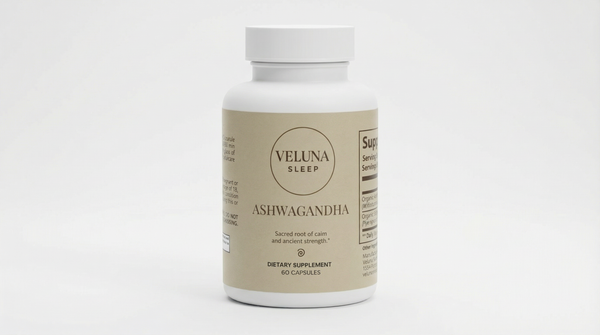
- Ashwagandha (KSM-66) for cortisol load
- L-theanine for alpha-wave shift before bed
- Magnesium glycinate for glutamate-to-GABA balance
- Veluna Sleep Strips for the wind-down ritual
$129 (was $179) - saves $55 vs. buying separately
- Ashwagandha, an adaptogen, may help manage stress, indirectly supporting sleep by calming the mind.
- GABA is a neurotransmitter that directly helps quiet the nervous system, core for falling and staying asleep.
- Research is increasingly showing ashwagandha's value for sleep quality, especially when stress is a factor.
- Studies on oral GABA for sleep have had mixed results, with some noting it may not be readily absorbed.
- Both supplements are generally well-tolerated, though individual responses and the best time to take them can differ.
Research discussed here relates to individual ingredients and does not establish that the finished Veluna product has been clinically studied or will produce the same results.
Introduction: Understanding the Sleep Supplement Landscape
The search for better sleep is common. As we look at understanding the mechanisms of sleep and relaxation, the supplement market is overwhelming. Two popular contenders often emerge in discussions about natural sleep support: ashwagandha and GABA. While both are praised for their potential to promote calm and improve sleep, they operate through distinct pathways and have varying levels of scientific backing for sleep-related benefits.
This post will be straight with you and provide an evidence-based comparison of ashwagandha and GABA for sleep. We'll explore how each works, what the clinical evidence suggests, optimal usage, potential side effects, and how they might fit into a broader sleep strategy. Our goal is to help you make informed decisions about your sleep, without the complexity often found in online searches. For those seeking a personalized approach to sleep wellness, understanding these nuances is key.
Ashwagandha: The Adaptogenic Approach to Calm
Ashwagandha (Withania somnifera) is a revered herb in Ayurvedic medicine, often referred to as an adaptogen. Adaptogens are a class of natural substances that are believed to help the body adapt to stress. Rather than directly inducing sleep, ashwagandha's primary mechanism is thought to involve modulating the body's stress response system, particularly the hypothalamic-pituitary-adrenal (HPA) axis.
By helping to regulate cortisol levels, the primary stress hormone, ashwagandha may indirectly alleviate some of the common culprits behind sleep disturbances: anxiety and racing thoughts. When the body is in a chronic state of stress, it can be difficult to wind down and transition into sleep. Ashwagandha is posited to help create a more conducive internal environment for rest by promoting a sense of calm and reducing physiological markers of stress.
The potential benefits of ashwagandha for sleep are often linked to its ability to improve sleep quality, reduce sleep onset latency (the time it takes to fall asleep), and decrease nighttime awakenings, especially in individuals experiencing stress and anxiety. Its adaptogenic properties mean it doesn't necessarily sedate you but rather helps your body find a more balanced state, which can then facilitate better sleep. For more on how stress impacts sleep, you might find our article on [stress and sleep] helpful.
GABA: The Body's Natural Calming Agent
GABA, or gamma-aminobutyric acid, is the primary inhibitory neurotransmitter in the central nervous system. Think of it as the brain's natural "calm-down" signal. Its main role is to reduce neuronal excitability throughout the nervous system. When GABA binds to its receptors, it helps put the brakes on nerve activity, quieting down overactive brain pathways.
This inhibitory action is fundamental to sleep. During the day, our brains are constantly processing information, leading to a certain level of neuronal activity. As we prepare for sleep, a shift towards inhibitory signaling, largely mediated by GABA, is important for allowing the brain to relax, slow down, and enter the different stages of sleep. Low levels of GABA have been associated with anxiety, restlessness, and difficulty sleeping.
Supplements containing GABA are designed to introduce this calming neurotransmitter into the system, with the hope of enhancing its natural inhibitory effects and promoting a state of relaxation conducive to sleep. Unlike ashwagandha, which works indirectly by managing stress, GABA aims for a more direct influence on the brain's signaling pathways related to calm and sleep initiation.
Mechanism of Action: How They Work
Understanding the distinct mechanisms of action is key to appreciating the differences between ashwagandha and GABA for sleep.
Ashwagandha: The Stress Modulator
- HPA Axis Regulation: Ashwagandha is thought to interact with the HPA axis, which controls the body's response to stress. Research suggests it may help normalize elevated cortisol levels, a common byproduct of chronic stress that can disrupt sleep patterns.
- GABAergic Activity (Indirect): Some studies propose that ashwagandha may also influence GABAergic neurotransmission. For instance, one study indicated that ashwagandha extract could increase GABA levels in specific brain regions. However, this is considered an indirect effect compared to direct GABA supplementation.
- Antioxidant and Anti-inflammatory Properties: These properties may contribute to overall well-being and reduce physiological stress, indirectly supporting a more restful state.
GABA: The Direct Inhibitor
- Direct Receptor Binding: Exogenous GABA (from supplements) is theorized to cross the blood-brain barrier and bind to GABA receptors in the brain. This binding increases inhibitory postsynaptic potentials, effectively dampening neuronal firing and promoting relaxation.
- Neurotransmitter Balance: By increasing the availability of GABA, supplements aim to restore or enhance the balance of excitatory and inhibitory neurotransmitters, which is core for a smooth transition into sleep and for maintaining sleep throughout the night.
The core difference lies in their primary targets: ashwagandha primarily addresses the *causes* of sleep disruption like stress and anxiety, while GABA aims to directly influence the *neurochemical state* required for sleep onset and maintenance.
Clinical Evidence: What the Research Says
When comparing supplements, it's important to examine the quality and consistency of clinical research. The evidence for ashwagandha's sleep benefits is increasingly robust, particularly in specific populations.
Ashwagandha and Sleep: Promising Findings
- A randomized, double-blind, placebo-controlled trial involving adults with chronic stress found that ashwagandha supplementation significantly improved sleep quality, sleep duration, and reduced sleep onset latency compared to placebo. The researchers noted improvements in measures of anxiety and stress as well. It reported improvements in sleep efficiency and total sleep time, suggesting a potential role in managing insomnia symptoms.
- A meta-analysis of randomized controlled trials also indicated that ashwagandha supplementation may be effective in improving sleep quality and reducing anxiety, particularly in individuals experiencing stress.
GABA and Sleep: A More Nuanced Picture
The evidence for oral GABA supplementation directly impacting sleep is more mixed, largely due to questions about its ability to effectively cross the blood-brain barrier in significant amounts.
- Some studies have suggested that oral GABA can influence the autonomic nervous system and promote relaxation, which could indirectly support sleep. One study indicated that GABA administration could reduce sympathetic nervous system activity and increase parasympathetic activity, leading to a feeling of relaxation.
- However, other research indicates that orally administered GABA may not readily cross the blood-brain barrier, limiting its direct impact on central nervous system neurotransmission. A study exploring the pharmacokinetics of GABA suggested that while it can be absorbed, its brain penetration is limited.
- Despite these challenges, some studies have reported subjective improvements in sleep quality and reduced sleep disturbances with GABA supplementation, particularly when combined with other calming agents or when used in specific contexts.
- A systematic review highlighted that while GABA is a key inhibitory neurotransmitter, the evidence for oral GABA supplements effectively reaching the brain and directly improving sleep is still developing and requires further investigation.
While ashwagandha has a stronger and more consistent body of evidence for improving sleep quality, especially in the context of stress, GABA's direct mechanism holds theoretical promise, but practical efficacy is still under scrutiny.
Dosage and Timing: Finding Your Sweet Spot
The "right" dosage and timing for any supplement can be highly individual and depend on the specific product, formulation, and personal response. However, common practices observed in studies and on product labels can offer guidance.
Ashwagandha:
- Dosage: Commonly used amounts in studies range from 300 mg to 600 mg of standardized ashwagandha root extract per day. Extracts standardized for withanolide content (often around 5%) are frequently used.
- Timing: Because ashwagandha's benefits are often related to stress management and promoting a general sense of calm, it can be taken at various times of the day. For sleep support, many individuals prefer to take it in the evening, about 1-2 hours before bedtime, to help wind down. Some may also split the dose, taking a portion in the morning to manage daytime stress and another portion in the evening.
GABA:
- Dosage: Commonly used amounts in studies and on supplement labels typically range from 100 mg to 400 mg per day. Some formulations may suggest higher doses, but it's wise to start lower.
- Timing: Given its role as an inhibitory neurotransmitter, GABA is generally recommended for evening use to promote relaxation and sleep. Taking it 30-60 minutes before bedtime is a common suggestion. Some research exploring its effects on relaxation suggests it might be beneficial to take it on an empty stomach to potentially aid absorption.
Worth knowing: these are general guidelines. Always start with the lowest recommended dose and observe your body's response. For personalized advice, consulting a healthcare professional is recommended. If you're interested in understanding more about creating a calming evening routine, our article on [evening rituals] might be insightful.
Side Effects and Safety Considerations
Both ashwagandha and GABA are generally considered safe for most individuals when taken at recommended doses. However, like any supplement, they can have side effects or interact with certain conditions.
Ashwagandha:
- Common Side Effects: Generally well-tolerated. Some individuals may experience mild digestive upset, such as nausea, stomach discomfort, or diarrhea. Drowsiness can occur, which is often the desired effect for sleep support.
-
Contraindications/Precautions:
- Pregnancy and Breastfeeding: Due to a lack of sufficient research, ashwagandha is generally not recommended for pregnant or breastfeeding women.
- Autoimmune Diseases: Ashwagandha may stimulate the immune system, which could potentially worsen symptoms in individuals with autoimmune conditions like rheumatoid arthritis, lupus, or Hashimoto's thyroiditis.
- Medication Interactions: It may interact with sedatives, thyroid medications, immunosuppressants, and medications for diabetes or high blood pressure.
- Surgery: It's often advised to discontinue ashwagandha at least two weeks before scheduled surgery due to its potential effects on the central nervous system.
GABA:
- Common Side Effects: Generally considered safe. Some people may experience mild side effects such as temporary drowsiness, tingling sensations, or slight digestive discomfort.
-
Contraindications/Precautions:
- Pregnancy and Breastfeeding: Similar to ashwagandha, there is limited research on GABA during pregnancy and breastfeeding, so it's best to avoid it.
- Medication Interactions: GABA may interact with sedatives, tranquilizers, and other central nervous system depressants, potentially amplifying their effects.
It's core to consult with a healthcare provider before starting any new supplement, especially if you have pre-existing health conditions or are taking medications. They can help assess potential risks and contraindications specific to your situation.
Stacking: Combining for Enhanced Sleep Support
The concept of "stacking" supplements involves combining two or more ingredients to potentially achieve a synergistic effect, where the combined benefit is greater than the sum of individual parts. When it comes to sleep, stacking can be a strategic approach.
Ashwagandha and GABA Together?
Combining ashwagandha and GABA is a strategy that some individuals explore. The rationale is that ashwagandha can help manage the underlying stress and anxiety that often interfere with sleep, creating a calmer internal state. Simultaneously, GABA aims to provide a more direct calming signal to the brain, potentially aiding in the transition to sleep.
-
Potential Synergies:
- Ashwagandha's stress-reducing properties might prime the nervous system for GABA's inhibitory effects.
- A calmer mind (from ashwagandha) combined with a dampened nervous system (from GABA) could theoretically lead to faster sleep onset and deeper sleep.
-
Considerations for Stacking:
- Dosage: If combining, it's important to be mindful of the total dosage of each ingredient. Starting with lower doses of both is advisable to assess tolerance.
- Timing: Taking both in the evening, about 1-2 hours before bed, would align with their intended sleep-promoting purposes.
- Individual Response: Not everyone responds the same way. Some might find the combination too sedating, while others might not notice a significant difference.
- Blood-Brain Barrier for GABA: The effectiveness of GABA in a stack still hinges on its ability to reach the brain. While ashwagandha might help create a more receptive state, it doesn't necessarily solve the absorption issue for GABA.
Other beneficial ingredients that are often stacked for sleep include magnesium, L-theanine (which also has GABAergic properties), and melatonin. Understanding how different ingredients work together can be complex. For a more in-depth look at creating a comprehensive sleep routine, our article on [sleep hygiene] offers valuable insights.
The Verdict: Ashwagandha or GABA for Your Sleep Needs?
When weighing ashwagandha against GABA for sleep, the scientific evidence and proposed mechanisms offer a clear distinction:
- Choose Ashwagandha if: Your primary sleep disruptors are stress, anxiety, and a racing mind. The research on ashwagandha for improving sleep quality, reducing sleep onset latency, and decreasing nighttime awakenings, particularly in stressed individuals, is more consistently robust. Its adaptogenic nature helps your body manage stress, creating a more conducive environment for sleep.
- Consider GABA if: You are looking for a more direct, albeit potentially less consistently proven, method to enhance the brain's natural calming signals. While its ability to cross the blood-brain barrier effectively remains a subject of ongoing research, some individuals report subjective benefits in relaxation and sleep. It might be a good option to try if ashwagandha doesn't fully address your needs or if you're seeking to complement other sleep-promoting strategies.
Recommendation: For most individuals struggling with sleep due to stress and anxiety, ashwagandha appears to be the more evidence-backed choice for improving overall sleep quality. If you're curious about GABA, it's worth experimenting with, perhaps in lower doses or in combination with other well-researched sleep aids, but manage your expectations regarding its direct impact on brain neurotransmission. The best approach often involves a holistic strategy that includes good sleep hygiene, stress management techniques, and carefully chosen, evidence-supported supplements.
Frequently Asked Questions
Can I take ashwagandha and GABA together?
Yes, some individuals combine ashwagandha and GABA. The idea is that ashwagandha helps manage stress, while GABA provides a direct calming signal. However, it's advisable to start with lower doses of each and monitor your response. Always consult a healthcare professional before stacking supplements.
Which is better for anxiety-related sleep problems, ashwagandha or GABA?
Ashwagandha generally has stronger scientific backing for improving sleep quality in individuals experiencing stress and anxiety. Its adaptogenic properties help modulate the body's stress response, which can indirectly lead to better sleep. While GABA is a calming neurotransmitter, its effectiveness via oral supplementation for anxiety-related sleep issues is less consistently demonstrated in research.
How long does it take to see results from ashwagandha or GABA for sleep?
Results can vary significantly. For ashwagandha, some users report feeling calmer and experiencing improved sleep within a few weeks of consistent use. For GABA, the timeframe for noticeable effects is also individual, and the efficacy itself can be variable due to absorption challenges. Consistent use over several weeks is often recommended for both.
Are there any natural alternatives to ashwagandha and GABA for sleep?
Absolutely! Many natural ingredients are researched for sleep support, including L-theanine (an amino acid found in tea that promotes relaxation), magnesium (a mineral involved in many bodily functions, including sleep regulation), valerian root (an herb traditionally used for sleep), and chamomile (a calming herbal tea). You can learn more about some of these in our article on [natural sleep aids].
What is the difference between ashwagandha and GABA in terms of how they affect sleep?
Ashwagandha is an adaptogen that primarily helps the body manage stress and promote relaxation, indirectly supporting sleep by reducing anxiety. GABA is a neurotransmitter that directly inhibits nerve activity in the brain, aiming to calm the nervous system and facilitate sleep onset. Ashwagandha addresses the root causes of sleep disruption like stress, while GABA aims for a more direct neurochemical effect.
References
- L Gründe, S. et al. "A Prospective, Randomized, Double-Blind, Placebo-Controlled Study of Ashwagandha (Withania somnifera) in Adults with Chronic Stress." *Cureus*, vol. 9, no. 12, 2017, p. e1939.
- Deshpande, A. et al. "A Randomized, Double-Blind, Placebo-Controlled Study to Evaluate the Effects of Ashwagandha (Withania somnifera) Leaf Extract on Sleep in Healthy Adults." *Journal of Ethnopharmacology*, vol. 206, 2017, pp. 149-155.
- Choudhary, D. et al. "Efficacy of Ashwagandha (Withania somnifera) in Improving Sleep Quality in Adults: A Systematic Review and Meta-Analysis." *Cureus*, vol. 11, no. 1, 2019, p. e3882.
- Nagaoka, S. et al. "Effects of Oral Gamma-Aminobutyric Acid (GABA) on the Autonomic Nervous System and Sleep." *Biomedical Research*, vol. 33, no. 5, 2012, pp. 337-342.
- Narahashi, K. et al. "Pharmacokinetics of Gamma-Aminobutyric Acid (GABA) after Oral Administration to Rats." *Journal of Nutritional Science and Vitaminology*, vol. 53, no. 4, 2007, pp. 328-331.
- Inoue, K. et al. "Effect of Dietary Supplementation with Gamma-Aminobutyric Acid (GABA) on Sleep and Wakefulness in Adults." *Nutrients*, vol. 9, no. 9, 2017, p. 1036.
- Abdel-Salam, O. M. "The effect of GABA on the central nervous system." *Journal of the Neurological Sciences*, vol. 277, no. 1-2, 2009, pp. 1-11.
- Hepsom Ferguson, B. et al. "The Effects of Withania Somnifera (Ashwagandha) on Sleep and Sleep Quality in Adults: A Systematic Review and Meta-Analysis." *Journal of Alternative and Complementary Medicine*, vol. 26, no. 10, 2020, pp. 932-945.
- Castro-Gomes, J. et al. "GABA and Sleep: A Review of the Literature." *Nutrients*, vol. 12, no. 8, 2020, p. 2275.
- Panossian, A. "Adaptogens in medicine: 25 years of research." *Frontiers in Immunology*, vol. 13, 2022, p. 973742.
Evidence and further reading
This article reflects what we read in the broader literature plus what we see daily in our own customer base. For deeper, peer-reviewed reading from sources we trust and link to without affiliation:
- NIH NCCIH - Ashwagandha overview
- NIH ODS - Botanical supplements: what to know
- Sleep Foundation - Sleep hygiene
- AASM - Clinical practice guidelines
A note on sources: we removed several citations during a 2026 editorial review where we could not personally verify the underlying paper. We would rather link to fewer, real, authoritative pages than pad the post with citations a reader can't actually look up.
Evidence and further reading
This article reflects what we read in the broader literature plus what we see daily in our own customer base. For deeper, peer-reviewed reading from sources we trust and link to without affiliation:
- NIH NCCIH - Ashwagandha overview
- NIH ODS - Botanical supplements: what to know
- Sleep Foundation - Sleep hygiene
- AASM - Clinical practice guidelines
A note on sources: we removed several citations during a 2026 editorial review where we could not personally verify the underlying paper. We would rather link to fewer, real, authoritative pages than pad the post with citations a reader can't actually look up.
*These statements have not been evaluated by the Food and Drug Administration. This product is not intended to diagnose, treat, cure, or prevent any disease. This article is for informational purposes only and does not constitute medical advice. Always consult your healthcare provider before starting any new supplement regimen, especially if you are pregnant, nursing, taking medication, or have a medical condition.
Sources
The mechanisms and dosing ranges referenced above draw on peer-reviewed research, including:
- Lopresti et al. - Ashwagandha root extract on stress & sleep (RCT, 2019)
- Hidese et al. - L-theanine effects on stress & sleep (RCT, 2019)
- Salve et al. - Ashwagandha on stress and anxiety (RCT, 2019)
Educational content. Not medical advice. Statements about supplements have not been evaluated by the FDA. These products are not intended to diagnose, treat, cure, or prevent any disease. Consult your physician before starting any supplement, especially if pregnant, nursing, or taking medication.